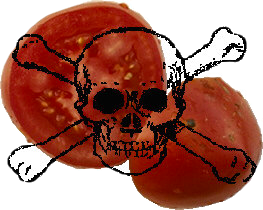
we hate tomatoes. we want to eradicate the seed from the earth.
OTHER STUFF:
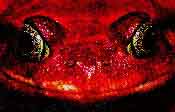
THE MADAGASCAR TOMATO FROG — DYSCOPHUS ANTONGILLI
The tomato frog's fiery red skin acts as a WARNING to predators. By releasing a TOXIC glue-like substance from its skin, animals that attempt to eat the frog get sick. Again, this is a prime natural example of nature's signs - stay away from RED.
TOMATOS ARE POISONOUS
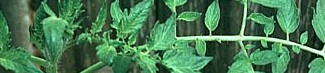
Through ingestion, the leaves and stems are poisonous. Symptoms include headache, abdominal pain, dilated pupils, vomiting, diarrhea, circulatory and respiratory depression, loss of sensation. The toxic substances are glycoalkaloids: solanine and demissine.
You have been WARNED! I am trying to help you!!
WALNUTS KILL TOMATOS!
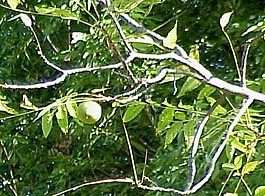
Black walnut tree roots exude a compound into the soil called juglone which is toxic to tomato plants. So.... if you know anyone who grows black walnut trees, buy some walnuts, then plant lots of trees in your backyard. In a few years, when you have many walnuts, grind the juice from them and infiltrate any tomato garden. This can be a lot of fun for the kiddies too.
You may also grind up the bark and branches to create a mulch, then label it as tomato mulch and sell it to a tomato farmer. HA HA HAAAA
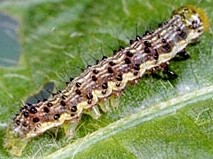
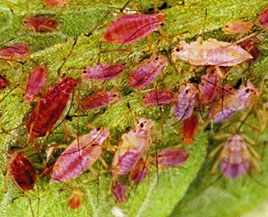
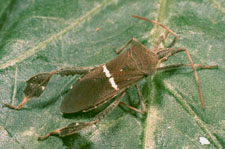
PROTECT THESE INSECTS — THE FOLLOWING ALL KILL TOMATO PLANTS
THE NIGHTSHADE FAMILY — WHAT THE TOMATO MARRIED INTO
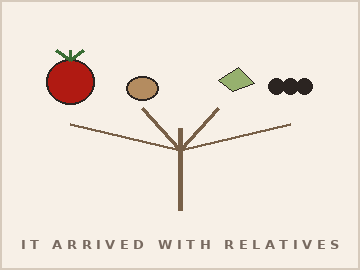
The tomato is a Solanum, and Solanum is not a gentle family. Deadly nightshade is in it. Henbane is in it. Mandrake is in it. Tobacco is in it. The potato is in it. Every plant in that group that anyone has ever studied closely has been found to be carrying something — atropine, scopolamine, nicotine, solanine, tomatine.
The tomato did not arrive alone. It arrived with relatives, and it brought the family chemistry with it.
THE WILD ORIGINAL IS STILL OUT THERE — SOLANUM PIMPINELLIFOLIUM
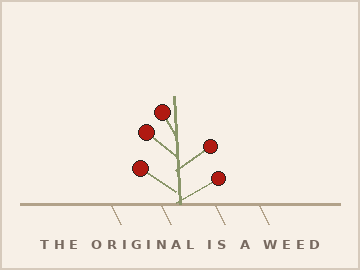
Before anybody bred it, the tomato was a currant-sized berry on a scraggly weed on the dry slopes of Peru and Ecuador — and it is still there now, doing exactly what it always did. One gram. Bitter. Full of tomatine. The local birds leave it alone.
Everything about the modern tomato was manufactured: the size, the sweetness, the shine. Nothing in a supermarket is natural. We invented the thing we are complaining about, which is the strongest argument on this entire site, and we are keeping it.
TOMATINE — THE POISON THE PLANT MAKES FOR ITSELF
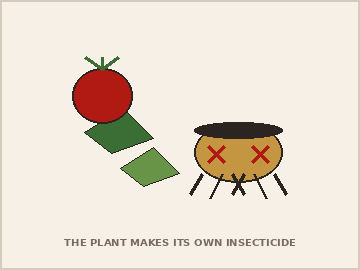
The tomato manufactures its own insecticide. It is called tomatine, it sits in the leaves, the stems and the unripe green fruit, and it is a defence: the plant is trying to kill the insects that come for it. It works. It stops beetles, it stops caterpillars, it stops fungi.
The tomato is not a food that happens to be a little toxic. It is a plant that has armed itself, and we eat the parts it protects least and call the rest of it a salad.
BLOSSOM END ROT — IT ABANDONS ITS OWN FRUIT
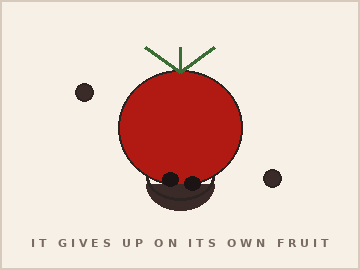
When a tomato plant cannot pull enough calcium up the stem, it does something remarkable: it gives up on the fruit. A black, sunken, leathery bruise opens at the base of the tomato and eats inward, and the plant walks away from it and puts its effort elsewhere.
It destroys its own produce rather than share it. Gardeners have spent decades trying to talk it out of this, and it keeps reminding us what it thinks of the arrangement.
PLANTS THAT HATE THEM TOO — FENNEL, DILL AND THE CABBAGE FAMILY
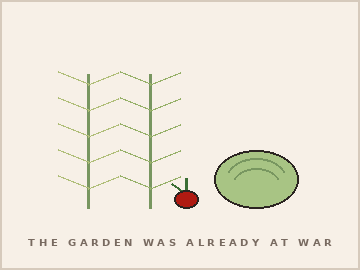
The tomato's enemies are not all insects. Fennel will stunt it. Dill will stunt it. The whole cabbage family — broccoli, cauliflower, kale, kohlrabi — will quietly take the ground out from under it and slow it to nothing by August.
Plant a row of any of those beside a tomato and watch. We did not start this war. The garden was already having it before we arrived.
LATE BLIGHT — ONE WET WEEK AND THE WHOLE FIELD IS OVER
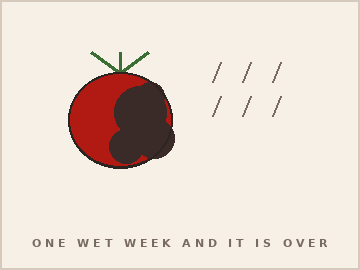
You have driven past a field in late August that smelled like something had died in it. That is late blight, and what it ate was the tomatoes. Not a few of them — all of them, in about six days.
Phytophthora infestans is not even a fungus. It is a water mould, closer to the algae in a pond, and it eats the nightshade family for a living. In the 1840s it took the potato — the tomato's own cousin — killed about a million people in Ireland and put another million on boats. Same organism. Same family. And you are eating the family.
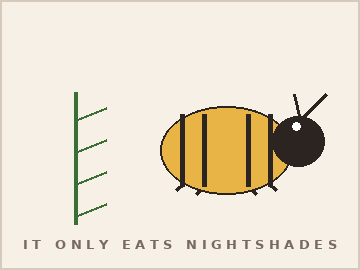
THE COLORADO POTATO BEETLE — THE INSECT THAT VOTED WITH US
Everything that eats a tomato has to get past the poison first. This one just eats it — in daylight, in front of the farmer, in stripes.
It is native to the wild nightshades of the Rocky Mountains, it followed the potato all the way east across the continent, and when the tomato arrived it took that too. One female lays hundreds of eggs. A plant that was a plant on Tuesday is bare sticks by the weekend. It has shrugged off every chemical we have ever invented for it. It is the only living thing on this page that is as committed as we are.
ROOT-KNOT NEMATODES — YOU WILL NEVER SEE IT HAPPEN
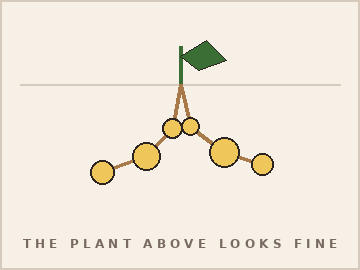
Your plants look fine. That is the whole trick. The worms are in the soil, far too small to see, and they check in at the roots — and the roots answer by growing hard lumps around them, and those lumps are where the plant was supposed to be drinking from.
Above the ground, nothing dramatic happens at all. The plant just gets a little smaller every week. The fruit comes in small. It wilts at noon and picks up again at night, and every gardener on the street spends the summer blaming the weather, because there is nothing else to blame. It has been in that bed for years. It will be there next year. And there is no spray that reaches it.
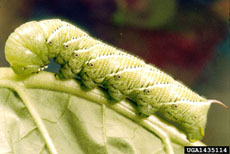
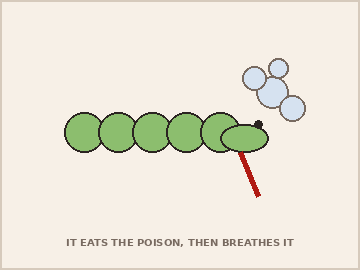
THE HORNWORM EATS THE POISON AND BREATHES IT BACK OUT
The tomato arms itself. Nicotine, tomatine, solanine — the chemistry is the whole point of the plant. And a fat green caterpillar called the tobacco hornworm eats the leaves anyway, keeps the poison inside its body, and then breathes it out of the holes in its sides as a cloud that drives off the spiders hunting it.
That is published research, by real people, with funding. Which makes it the only honest verdict on the entire plant: the one animal that eats the poison has to turn itself into poison to get away with it. You are not eating a salad. You are eating a chemical defence that somebody has decided to serve cold with mozzarella.
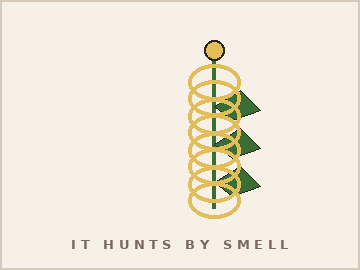
DODDER — THE PLANT THAT HUNTS A TOMATO BY SMELL
This is the one to bring up at dinner. Dodder is a plant with no leaves, no green in it and almost no roots. It comes out of the ground as a bare thread, it has a few days to find something to eat or it dies — and it finds it by smelling it. It picks up the chemicals a tomato gives off and grows straight at the plant making them.
Then it winds round the stem, pushes in, and drinks. From that moment the tomato is feeding two plants and only one of them is a tomato. So add it to the list: the smell. Even the blind vegetation hunts this thing by nose, and the vegetation has not even got a nose.
TOMATO MOSAIC VIRUS — IT LIVES IN THE SOIL, THE SEED AND ON YOUR HANDS
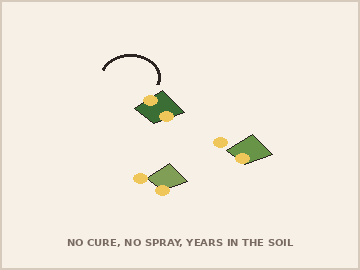
Here is something that survives an Ontario winter inside a dead root, comes back the next year in the seed, and rides in on a trowel. It mottles the leaves, curls them, stunts the fruit — and there is no cure, no spray, no treatment, and no way to get it back out of the bed once it is in. The bed is that way now.
It also arrives on the hands of anybody who has handled tobacco, because it is the same family of virus. So the grower can infect his own crop just by standing in it. You are not gardening the tomato. You are negotiating with it, on its terms, in its soil, and it does not concede anything.
BLOSSOM DROP — IT QUITS RATHER THAN TRY
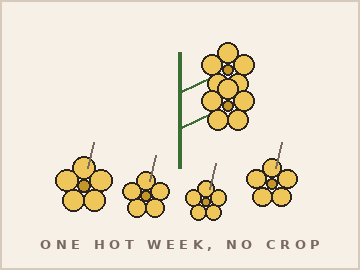
A tomato flower has to be pollinated inside a narrow band of weather. Above about thirty-two degrees the pollen is cooked and no longer works at all. Below about thirteen it will not move. Get the humidity wrong and it will not even release.
So the plant drops every flower onto the ground. All of them. Then it starts again in a few weeks if the weather has improved. One hot week in July and the season is gone. Everything else in that garden is working through it; this thing takes the week off and blames the sun. You have worked with this person.
THE ANTS FARM IT
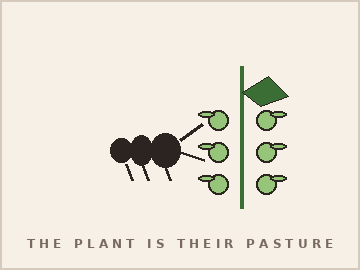
The ants found the aphids on the stem and worked out immediately what they had: a tap. The aphid drinks the plant and passes the sugar out the back. The ants drink that, and in return they guard the aphids, carry them to better stems, and kill the ladybirds that come for them.
That is agriculture. Livestock, husbandry, and a defended pasture — and the pasture is the tomato. Everybody involved in this arrangement understood the job except the gardener, who paid for the seed.
TOMATO RASH — ASK THE PEOPLE WHO PICK THEM FOR A LIVING
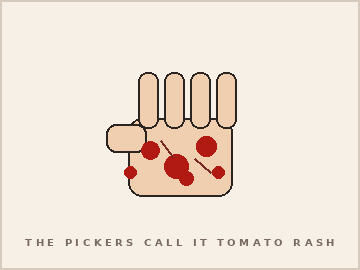
The poisons are not only in the leaves and the green fruit. They are in the sap, and the leaves are covered in tiny hairs that break off and hang on to it. People who pick tomatoes for a living — all day, in the heat, season after season — get a thoroughly documented contact dermatitis from it. Cracked hands, splits, blisters. The crews have a name for it: tomato rash.
Ask a farm worker in August whether this is food. We have been saying for twenty-five years that it is a physical complaint, and the people who handle the most tomatoes on earth have agreed with us in the medical literature and given it a diagnosis.
VOLUNTEER TOMATOES — IT WILL NOT STAY DEAD
Throw one rotten tomato on the compost and the seed is still alive in it. Put that compost on a bed and it comes up. It comes up in the gravel, in the crack by the step, in the field margin, in the drainage ditch, and in the bed you planted something else in.
Gardeners have a word for it and the word gives the whole game away: a VOLUNTEER. Something that turned up without being asked and will not leave. The seed survives the winter, the water, the machine, and in a lot of cases the gut of whatever ate the fruit — going through it actually improves its chances. So this is not a crop we are keeping. It is an escape we harvest, replant every spring, and call a garden.