WORLD INFESTATION:
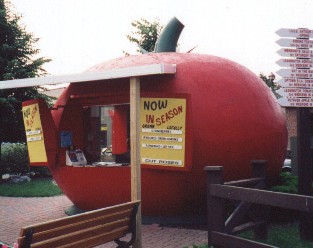
LEAMINGTON, ONTARIO, CANADA
What's up with the huge tomato kiosk?
I've been there - way too many times. Heinz grew the town into "The Tomato Capital of Canada." Southern Ontario is full of tomato farmers and during their harvest season, truck loads travel the bumpy roads into Leamington. Along the way, lots of tomatoes fly off the truck, get run over and sit there squashed rotting in the sun. You would not want to smell this. Be very careful on the roads. Tomatoes can kill.
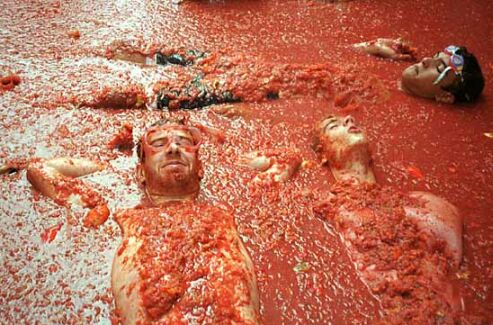
BUÑOL, SPAIN
People, this looks worse than a horror film. These people look deceased, floating in organ soaked tissue and blood. But it's worse than what meets the eye. It's really tomatoes, which means they smell horrid, worse than death itself.
These people don't know it, but the acid from the tomatoes are going to kill them 20 years before their time. The only good thing about all this, is they are using tomatoes in a war. I'm in shock & awe. You won't ever, EVER catch me within 100 kilometers from La Tomatina.
it happens on the last wednesday of august, in buñol — the 26th in 2026, the 25th in 2027. they will be doing it again.

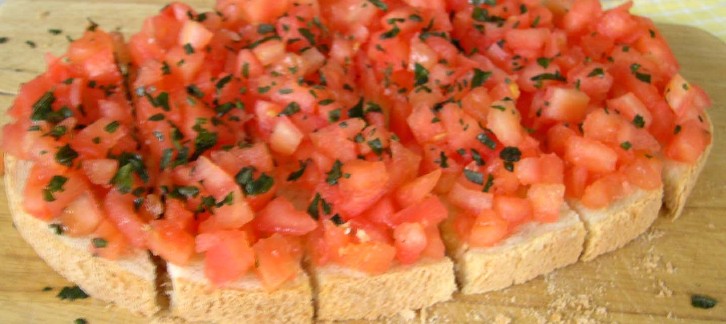
ITALY
Italy is perhaps the king of tomato land. I'm glad I don't live there because virtually all dishes come packed with tomatoes. If you were to go to Italy and ask for anything "minus the tomato" they would give it to you anyway because they'd think you were joking. I think Italy is to blame for all the tomatoes infestation all over the world. Someone figured out they grow like weeds. I can't bear to look at this page anymore. I can almost taste the fumes coming off this picture. It's making my eyes hurt.
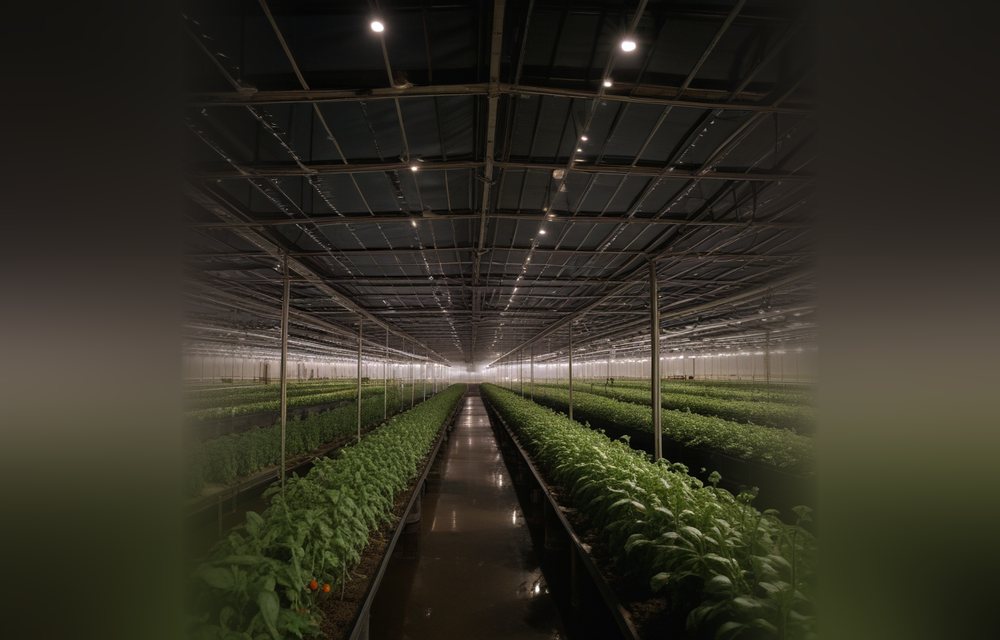
THE NETHERLANDS, UNDER GLASS
I have been through the fields where this berry is grown and there are no fields. There are buildings — hectares of glass, lit all night in winter, the plants standing in slabs of spun rock where soil should be. No sun in that country worth the name, no season inside the walls, and the crop comes out anyway, more per square metre than almost anywhere on earth. I do not call that farming.
The method is the confession. A poisonous berry that grew where it belongs would never need a lamp; this one is grown under one because it will take any ground it is given, and the shortest route from a seed to a shipping pallet is a heated shed. Nobody in there is selling a taste. They are selling a volume, on a truss, in February. Refuse the glass house and everything cut from the vine inside it.
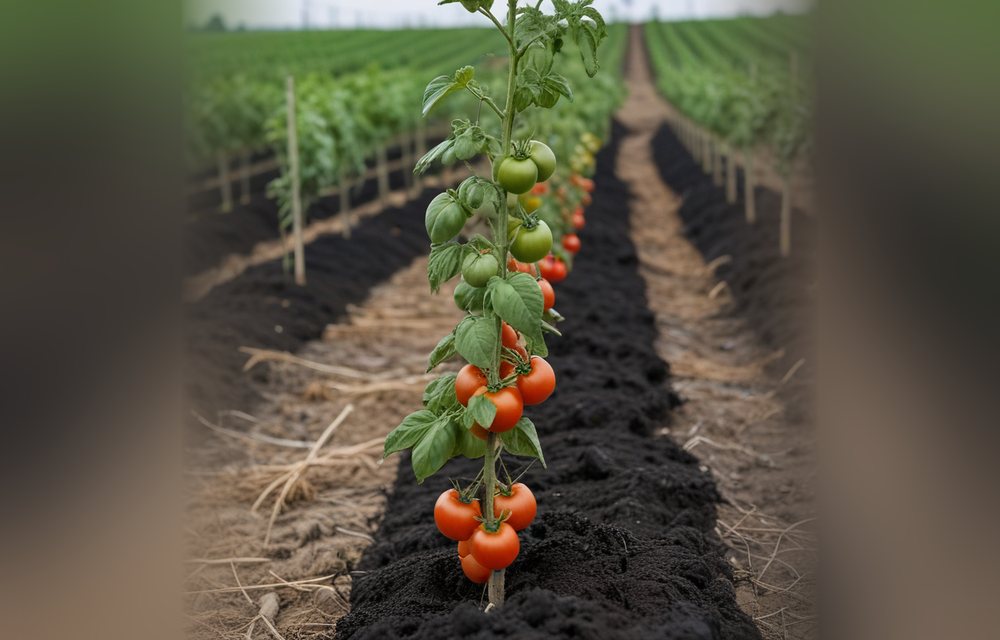
MEXICO, WHERE IT STARTED
Every history of this plant opens in Mexico and treats that as an alibi, as though being born somewhere excused what it did next. It was domesticated here and it took its name from here; the Latin it carries now means wolf peach, which is what people call a plant they are afraid of. Then it was carried out and planted on four continents without one country being asked.
What the origin sells now is the winter crop, picked hard and green because a ripe one would not survive the road, then turned red in a room on the way, under gas, on a schedule set by the buyer. The colour in a February supermarket was not grown. It was decided. Refuse the winter berry that arrived red.
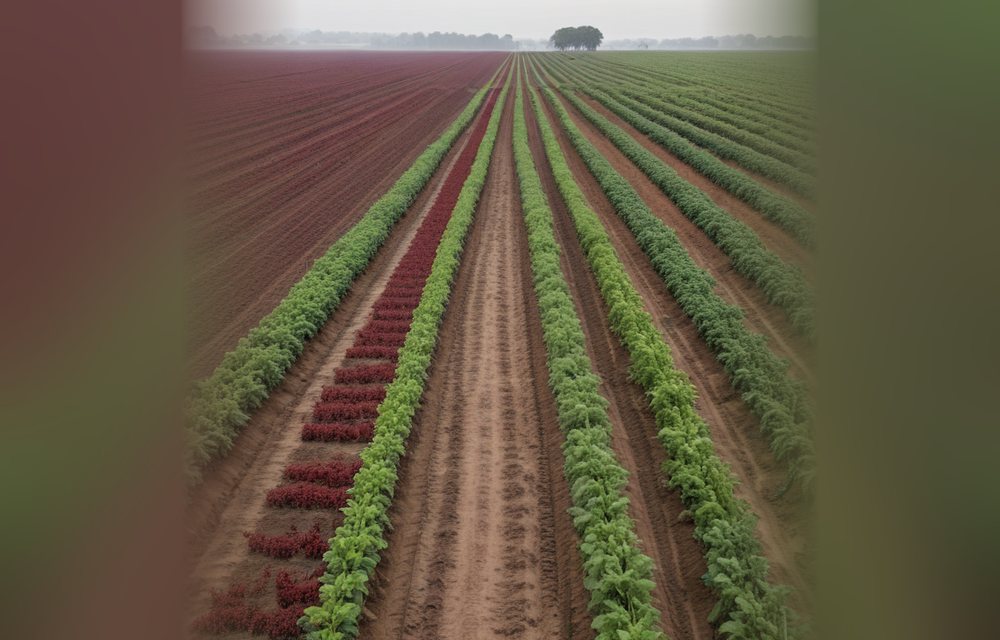
THE UNITED STATES, BY RULING
In 1893 the Supreme Court of the United States was asked whether this was a fruit and said no, on the ground that it is served at dinner and not at dessert, and it has been a vegetable in law ever since. The court did not consult a botanist. It consulted a menu. Every schoolchild there is taught the botanical answer and every customs officer applies the other one, and nobody has gone back to correct it, because correcting it would cost somebody money at a port.
The ruling is not the offence. The ruling is the admission — a berry that needs a court order before it can be eaten as a meal has told you what it is. And the country has kept faith with the finding: the southern crop is picked hard, shipped north, and held under lights and gas until it matches the picture on the box. Nothing in that chain photographs as a field. Refuse the berry that had to be reclassified to become dinner.
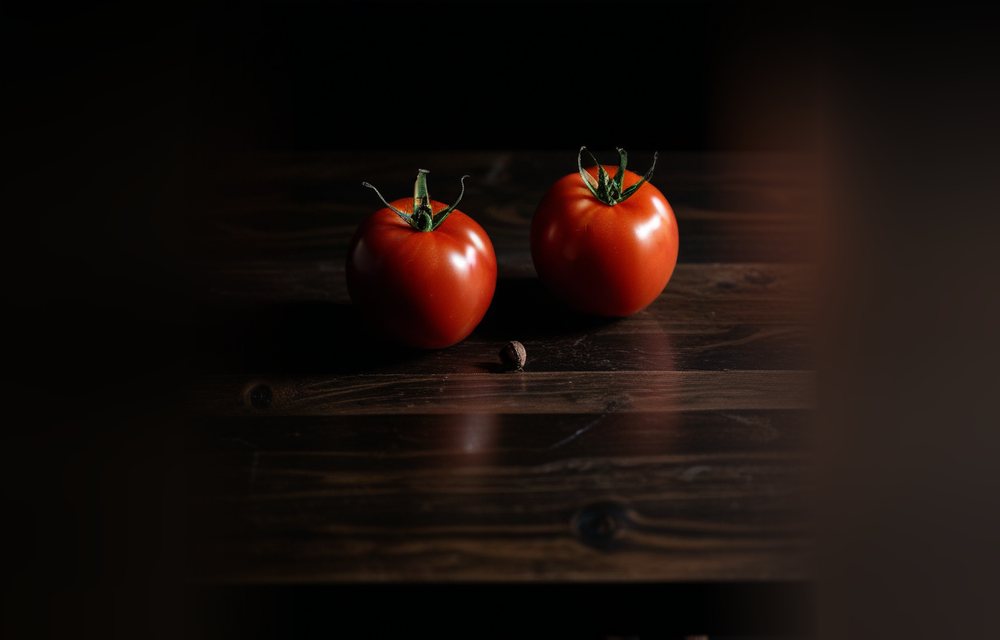
JAPAN, IN A GIFT BOX
I have seen the box: two berries in tissue in a shallow wooden tray, sold as a gift, priced beside the melons in the same display. Four hundred years of argument and a breeding programme, and the answer turns out to be that everybody knew. Japan did not discover anything. Japan paid to have the admission bred in.
The varieties are selected for sugar — not acid, not keeping, not anything a cook would reach for. Sugar, so the thing can be eaten alone, out of the hand, as a sweet. A berry sweetened until it passes as dessert has stopped pretending to be food, and the people who bred it were not confused about which of the two they were making. Refuse the gift box that sells it as a sweet.
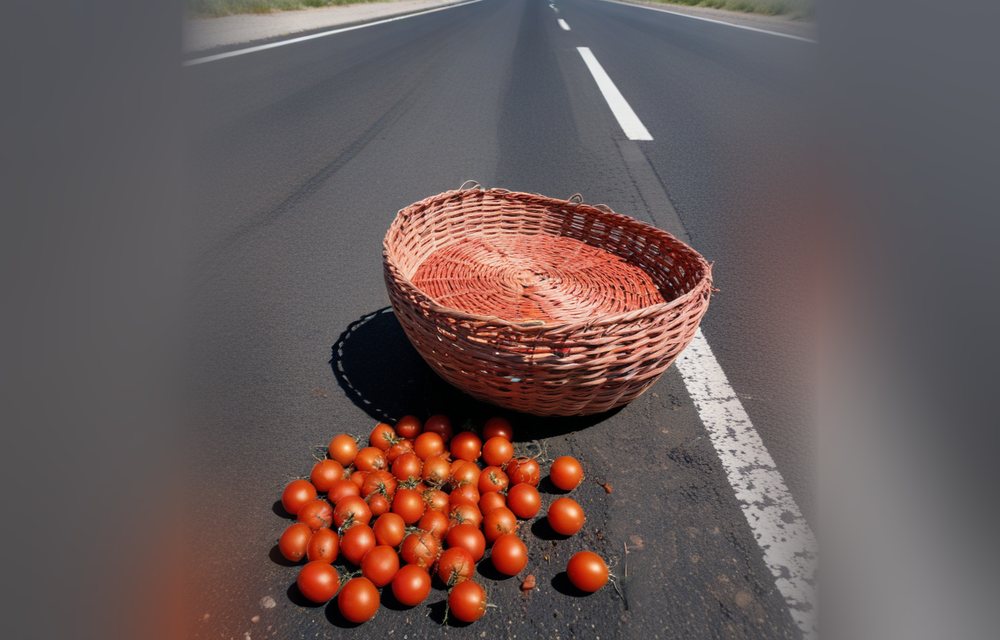
NIGERIA, ON THE SHOULDER OF THE ROAD
I have driven behind the trucks. The berry is stacked in woven baskets, open to the air, four high, on a road that is bad for two hundred kilometres, and by the time the load reaches the city the bottom baskets have been crushed by everything above them. It is on the shoulder when they stop: skins, pulp, a red-brown smear where somebody braked. I know of no other food that destroys itself in transit, and I have never once heard anyone propose growing less of it.
Then the country buys the same berry a second time, in a tin, because the fresh crop spoiled before it could be sold. Grown once, paid for twice — that is the trade in one line, and it is what happens when a thing is grown because it grows easily rather than because it is wanted. Refuse the basket that arrives as a stain.
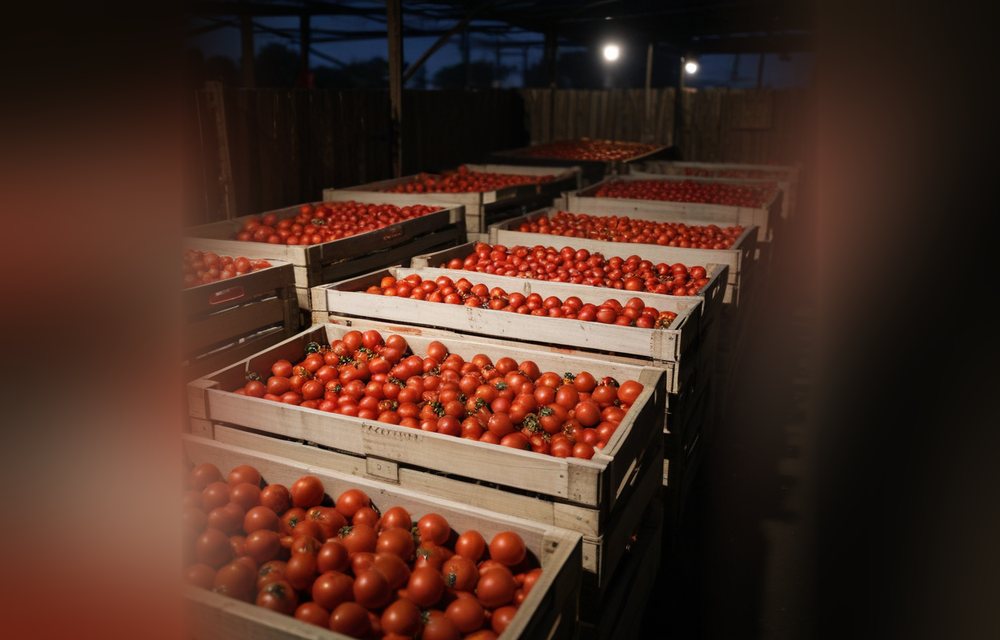
INDIA, AT THE PRICE BOARD
In India the price of this berry is followed the way weather is followed elsewhere. It climbs and the number goes on the front page; it falls and the story vanishes; and in between, for a week at a time, a garnish becomes a subject of national argument. I have watched it behave like a currency, and nobody has ever put the price of a cucumber on a front page.
It is also the first thing in the pan. Before the onions, before the spice, the berry goes in and the dish is built on top of it, so that no version of the dish exists without. I have asked, in three kitchens, and each time was told that the dish is the dish — which is not an answer, it is a description of a siege. Refuse the base of the pan.
CHINA
Thank you China, for not putting tomatoes into any of your food! You're like pre-BLT-McDonalds, I can go there and order anything off the menu and never have to worry about looking under the bun. Ahhhh, I love chinese food so much! This is just a theory, but Chinese people live a very, very long healthy life - it's because they don't eat tomatoes!!!! I love you China.
All over the world, strange tomato loving weirdos do something to make your town disgusting. Tell us about it.