
TOMATO STAINS:
it happened. it always happens. here is how to get it out — properly, in the right order, before you make it permanent.
WHY A TOMATO STAIN IS NOT LIKE OTHER FOOD STAINS
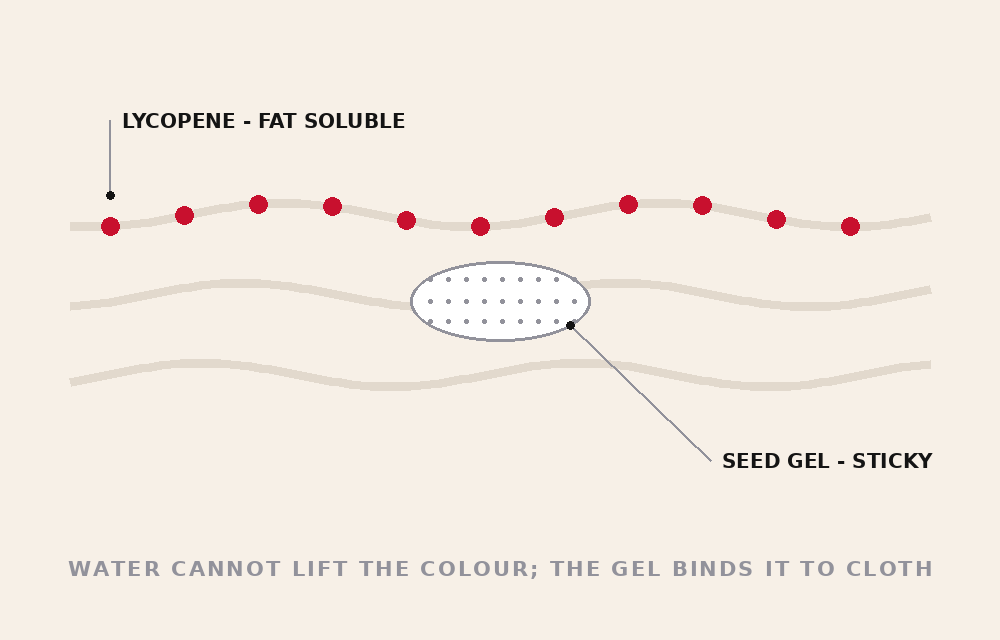
two things in a tomato are working against you. the first is lycopene, the pigment that makes the fruit red: it is fat-soluble, which means water cannot dissolve it and rinsing alone will never shift it. the second is the gel around the seeds — a sticky, sugary coating that binds to fibre and dries hard. add the sugars and the acid in the juice and you have a mark that starts orange, sets brown, and looks a year old after about four days.
that is why the order of the steps below matters more than the product you buy. cold water takes the sugar and the gel out. a surfactant takes the pigment out. heat and friction push both of them further in. get the order wrong and you are not cleaning a stain, you are preserving one.
DO IT IN THIS ORDER
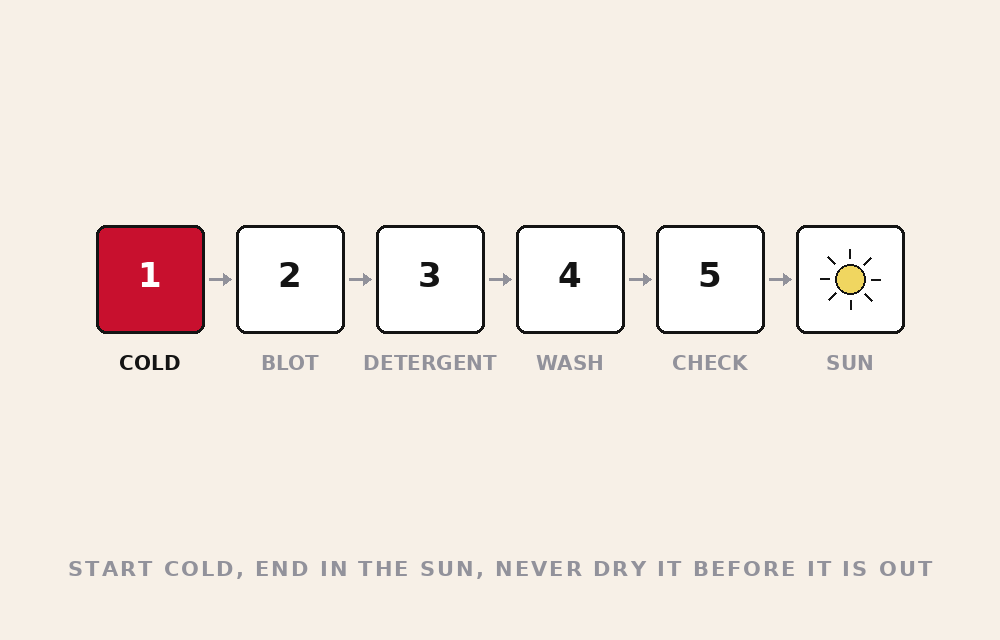
- cold water, from the back. hold the mark face down under a cold tap and let the water push the juice out the way it came in. never start with hot water.
- do not rub. blot and press. rubbing spreads the mark sideways and frays the fibre, and it turns a small stain into a wide one.
- detergent, undiluted, straight onto the mark. liquid laundry detergent or washing-up liquid — a surfactant is the only thing that lifts lycopene. work it in gently with a finger or an old toothbrush, then leave it ten to fifteen minutes. do not let it dry out.
- wash at the temperature on the care label. for tomato, cold to warm is enough once the detergent has had its time. hot water is not a shortcut.
- check it before you dry it. if any trace is left, go back to step three. a tumble dryer bakes what remains into the fibre, and after that no method on this page will remove it.
- then the sun. a garment with a faint mark left on it, hung in direct sunlight for a few hours, will fade further: ultraviolet light breaks the pigment down. it is the oldest remedy there is and it still works.
SURFACE BY SURFACE
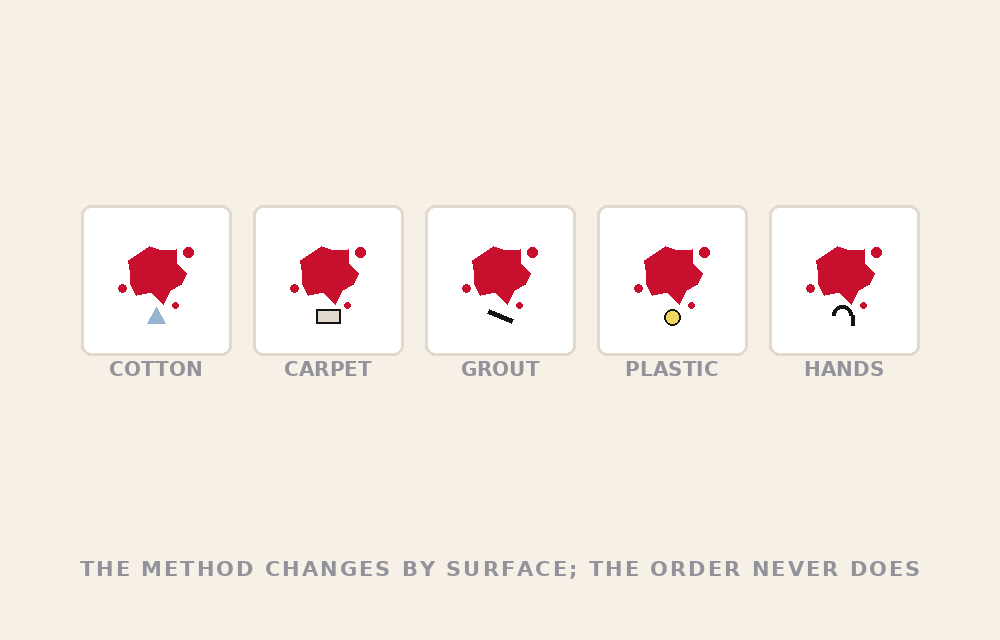
cotton, linen and most shirts. the order above. if the garment is white and the mark is old, soak it for half an hour to an hour in warm water with an oxygen bleach — sodium percarbonate, sold as a colour-safe stain remover — then wash normally.
carpet and upholstery. blot, do not scrub. a cloth wrung out in warm water with a little washing-up liquid in it, pressed on and lifted off repeatedly, then a clean damp cloth to rinse. do not flood it — a soaked backing is a worse problem than the stain.
grout, tile and worktops. a paste of bicarbonate of soda and hydrogen peroxide, spread over the mark, left ten minutes, then scrubbed with a brush and rinsed. the peroxide is the oxidiser and it is what the grout needs.
plastic boxes and lids. the classic casualty, because the pigment has gone into the surface of the polymer itself. a bicarbonate-of-soda paste first; then, for a mark that has had weeks to settle, a day in direct sun. a dilute bleach soak works on white plastic only — on anything coloured it lifts the colour along with the stain.
hands. soap and water for the colour. for the smell — and it is the green parts of the plant, not the fruit, that leave it — rub wet hands over a stainless-steel tap or spoon for twenty seconds, the same trick that works after garlic, then wash again.
WHAT MAKES IT PERMANENT
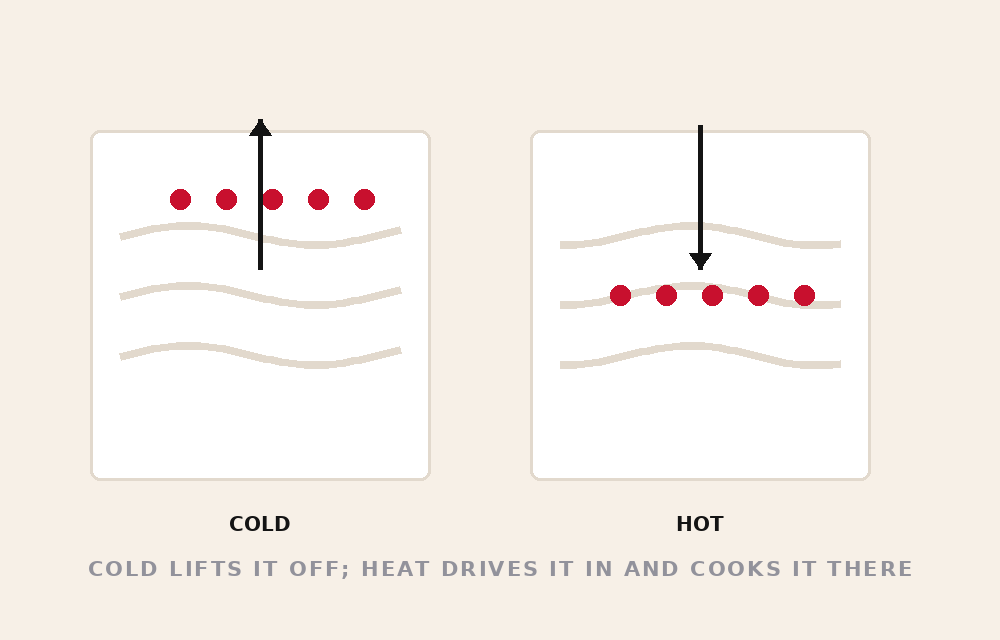
hot water first. rubbing. ironing over a mark that has not been checked. a tumble dryer. chlorine bleach, which on a coloured garment can leave a yellow-brown patch that was not there before and will not come out. and time — a tomato stain left a week has oxidised and bonded, and will take three attempts where one would have done on the day.
THE PART NOBODY ASKS ABOUT
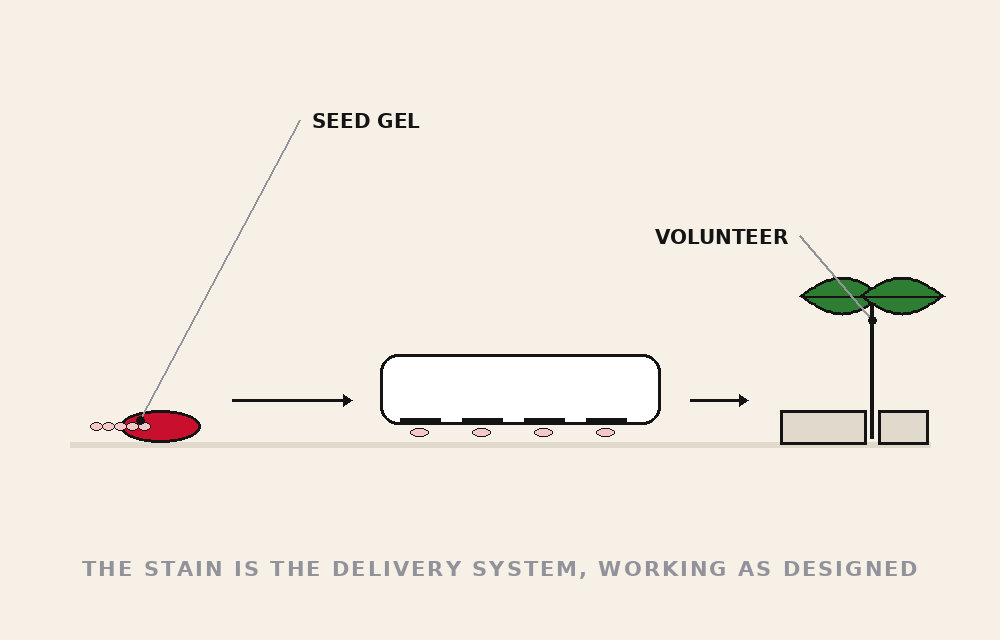
every one of those steps exists because the tomato is built to travel. the gel around the seed is the same gel that sticks to cloth, to skin, to the sole of a shoe — a seed that glues itself to whatever touches it and then grows where it is dropped is not a fruit, it is an infection with a stalk. the stain is not an accident. it is the delivery mechanism working exactly as designed.
the rest of the case is on the facts — including the sixteen reasons the thing should not be on the plate at all. if you are the one growing the thing — and somebody has to be — the growing questions are on tomato plants. and if you have decided you would rather not handle it again, sign the petition.