
TOMATO PLANTS:
the questions people actually type about growing the thing — yellow leaves, white leaves, plant food, what to put beside it — answered straight, and then the argument underneath.
WHAT A TOMATO PLANT ACTUALLY IS
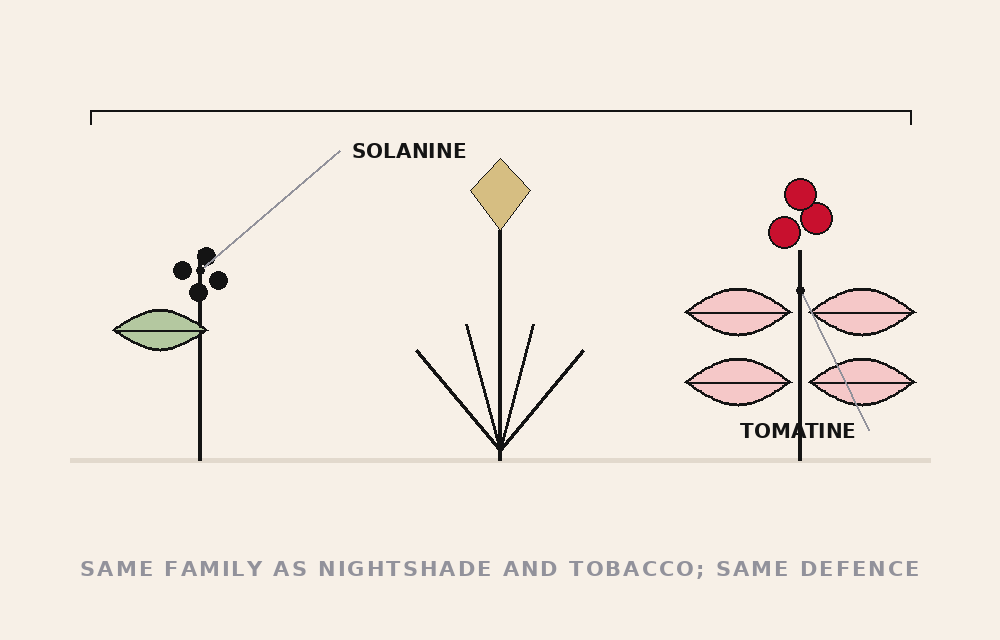
a nightshade, in the same family as deadly nightshade and tobacco, and it defends itself the way that family does: the leaves and the stems carry solanine and tomatine, and it is those, not the fruit, that do the damage. it is also a weed. it volunteers in cracks, in compost, in the gap between a wall and a path, and it fruits whether or not anyone watered it — a crop that plants itself is not a crop.
TOMATO PLANT LEAVES
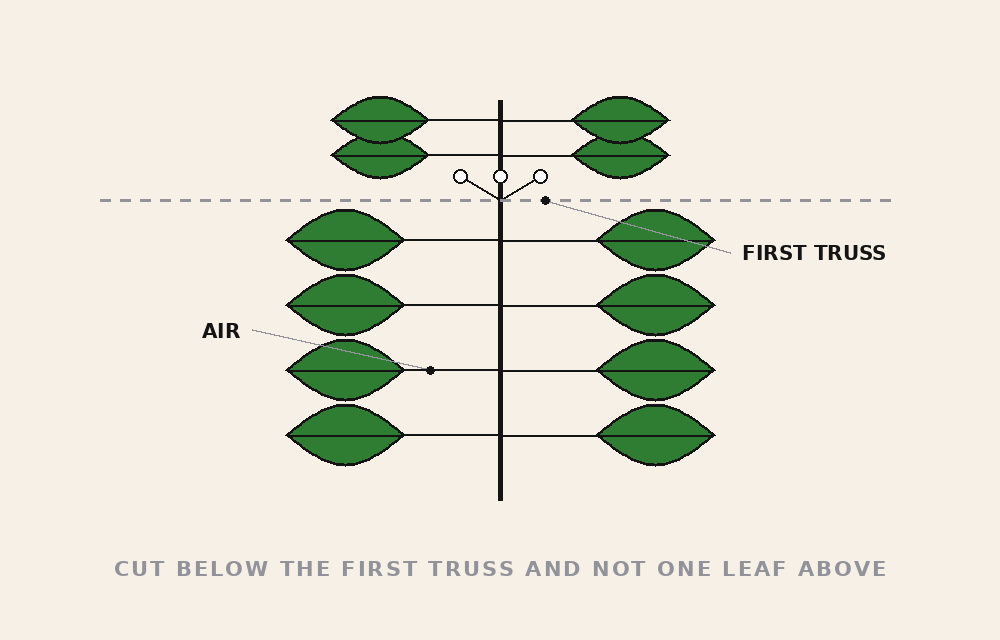
the leaf is the thing the plant actually runs on, and it is the thing people ask about most. three questions, in the order they get asked.
should you cut them off? yes, below the first flower truss. it takes away the leaves that touch the soil — which is the route blight uses — and it gets air moving through the plant. do not strip the leaves above the truss, in a hot summer: the fruit under them will scorch.
why are they dropping? from the bottom, with yellowing, it is water or nitrogen — the list above. flowers dropping instead of setting is different: heat above about thirty-two degrees, or still air, and the pollen never moves.
are they poisonous? yes, and this is the honest part of the whole plant. the leaves, the stems and the unripe green fruit carry solanine and tomatine, the tomato plant is listed as toxic to dogs and cats, and the smell left on your hands after handling them is the plant telling you what it is. keep the fresh prunings where a pet cannot chew them; they break down in a working compost heap, but a dog does not wait for that.
and plainly, because a claim this large deserves a plain sentence: if a person has eaten the green parts or a lot of unripe fruit and is unwell, that is a call for a poison control centre or a doctor — not for a website, and certainly not for this one.
YELLOW LEAVES: WHAT THE PLANT IS TELLING YOU
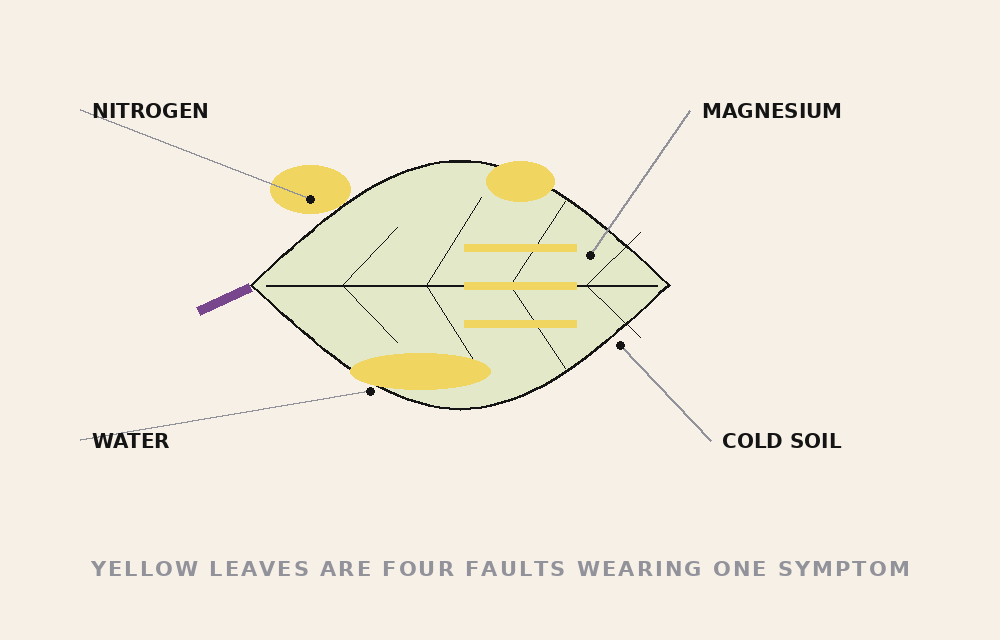
this is the most-asked question about tomato plants in both countries, and it is four different faults wearing one symptom. work down this list before you buy anything.
too much water at the root. the commonest cause by a distance. yellowing starts at the bottom and works up, the soil stays wet for days, and the leaves feel limp rather than crisp. drainage, not feed.
a nitrogen shortage. the whole plant pales evenly and the new growth is the smallest and the palest. that is a hungry plant, and it is hungry because it is a heavy feeder.
a magnesium shortage. the distinctive one — yellow between the veins while the veins themselves stay green, on the older leaves first. it shows up most in pots and in sandy soil.
cold soil. early in the season, before the ground has warmed, the roots cannot take up what is there and the plant goes pale and purple-stemmed. nothing is wrong with the plant; it was put out too soon.
blue-green or brown patches with a pale halo are not on that list, and they are not a feed problem — that is blight. strip the affected leaves, get the air through it, and keep it off the potatoes.
LEAF CURL
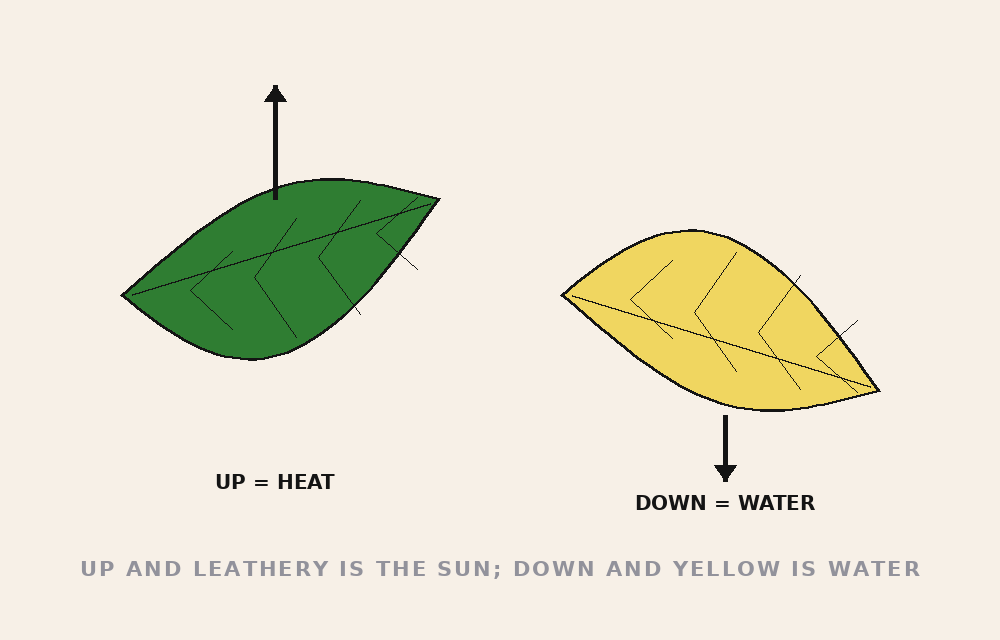
the other symptom people search for, and it is read by direction. leaves curlingupwards and going leathery in hot weather is physiological — the plant protecting its surface from the sun. leaves curling downwards with yellowing is water: too much at the root, or an aphid colony underneath. leaves that curl, mottle and stay small are a virus, and there is no cure for that one — pull it.
WHITE LEAVES
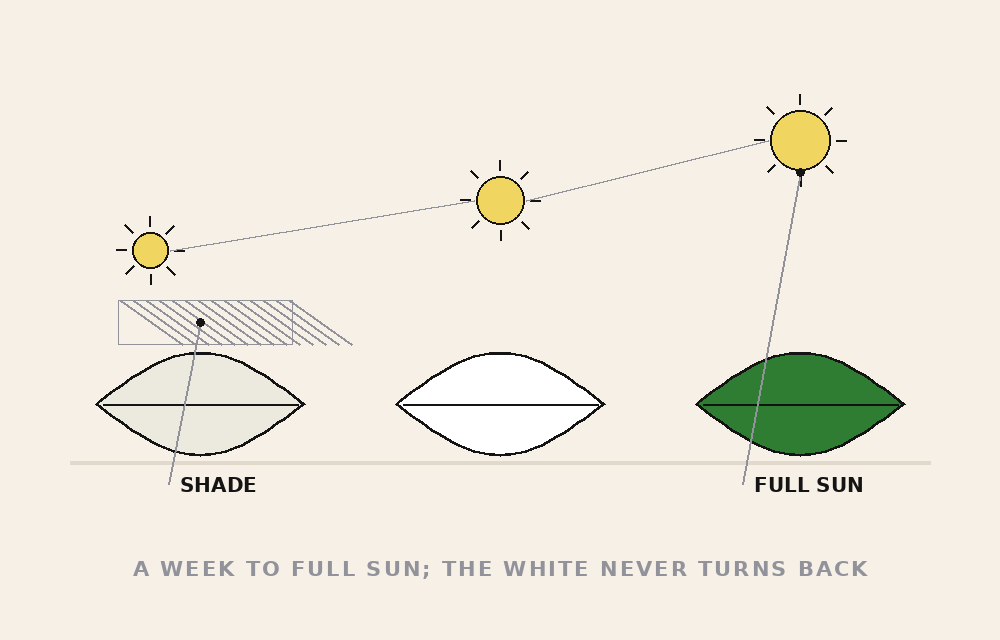
leaves that turn white, papery and thin have been scorched — sun on foliage that was raised indoors, or a late frost on new growth. the tissue is dead and will not come back. the plant will usually push new leaves from below within a fortnight. move it into full sun over a week rather than in a morning.
TOMATO BLIGHT
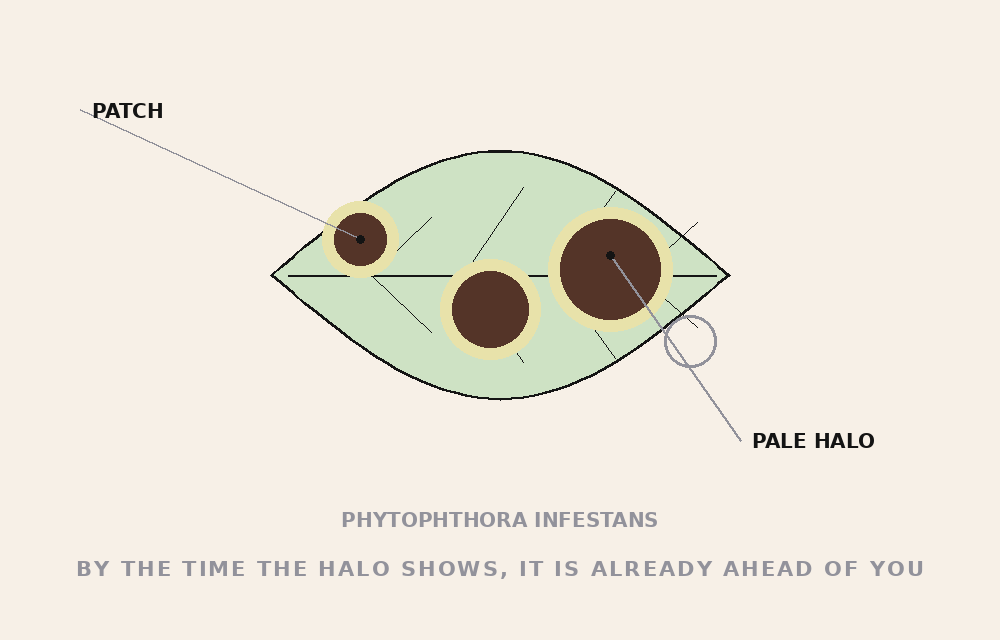
late blight is phytophthora infestans — the organism behind the irish potato famine, and it does not care which side of the family it is eating. it shows as brown-black patches with a pale halo that spread faster than anything else in a garden, and a white mould on the underside of the leaf in the damp of the morning. by the time you can see it, it is already ahead of you.
there is no cure once it is in. cut the plant down, bag it, and put it in the bin — never on the compost, where it overwinters and waits. what works is everything that happens before: air through the plant, space between the plants, water at the root and never on the leaf, the lower leaves stripped, and not a potato within sight.
and the two remedies people are searching for, honestly: potassium bicarbonate is a real contact fungicide that shifts the pH of the leaf surface, and it slows an infection rather than curing one — it has to be on before the rain, not after. horsetail is the old field remedy, and the evidence for it is thin. neither of them beats a dry June.
which is the argument, and it is not a joke: a crop that needs a fungicide programme to get through an ordinary wet summer is not a crop. it is a hostage.
TOMATO PLANT FOOD
the single fastest-growing thing in the whole tomato category, in both countries, and almost all of it is brand names — one garden-chemical brand accounts for four of the top five rising searches in the united states. here is what those products actually do.
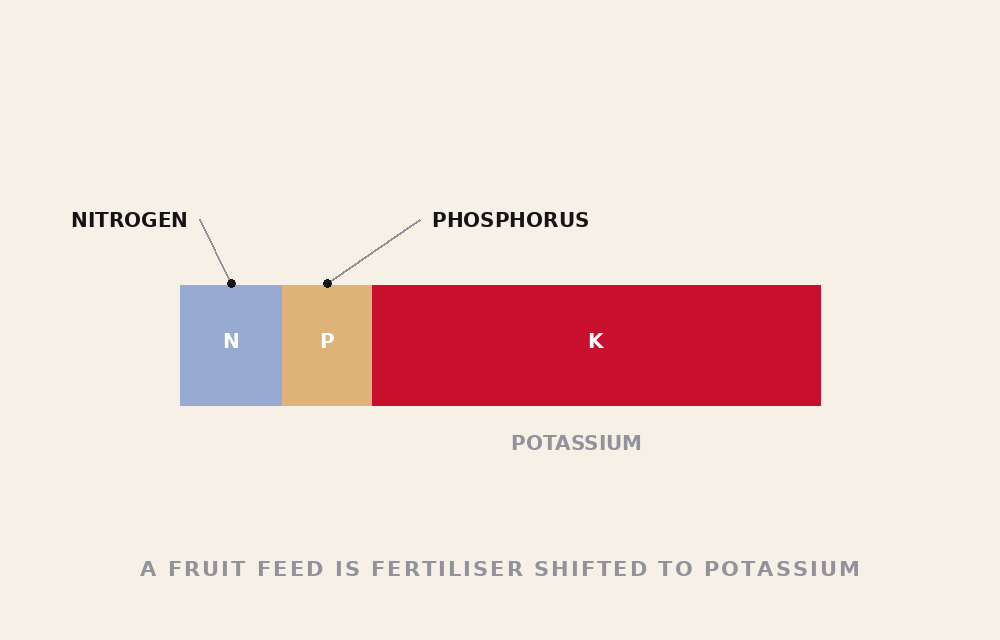
a tomato is a heavy feeder. it wants potassium for fruit, and it wants steady water far more than it wants any particular number on a bottle. a tomato plant food is simply a fertiliser with the ratio shifted towards potassium — and it works, which is why it sells.
the one thing worth knowing: blossom end rot — the black sunken patch on the bottom of the fruit — is blamed on calcium in every forum there is, and it is nearly always irregular watering. calcium arrives with the water, so a plant that dries out and floods never moves any, however much is in the ground. water evenly and the rot stops. buy nothing.
feed the soil, not the fruit. water at the root, never the leaf. and if the honest answer is that the plant will strip the bed it is in and want more next year, that is not a flaw in the advice — that is the plant.
WHAT NOT TO PLANT WITH TOMATOES
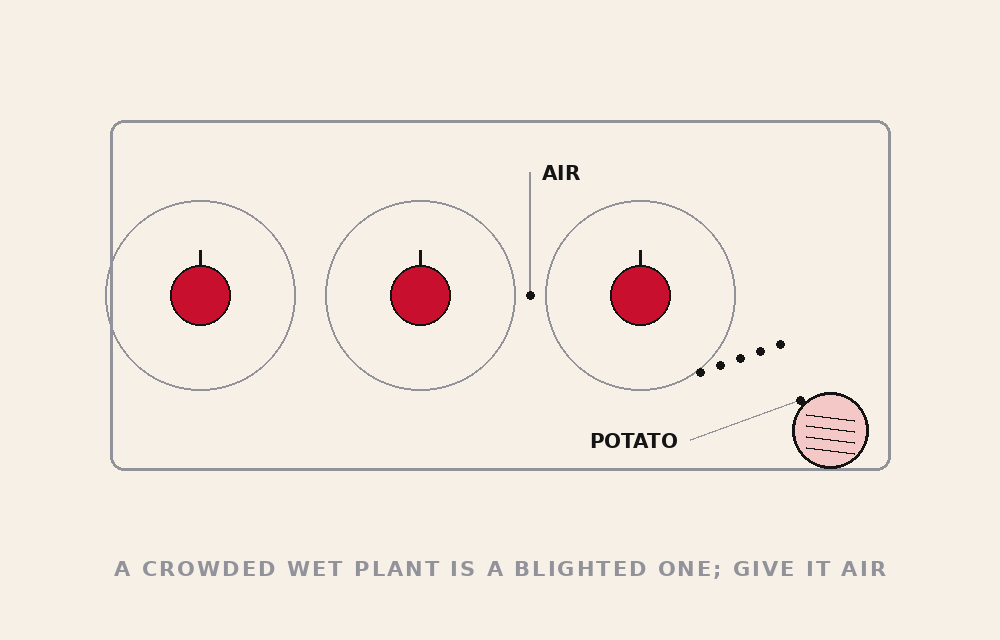
two answers that are not folklore. potatoes, because they share late blight and a garden bed is the shortest distance between two infected plants. and fennel, which releases compounds that suppress what grows beside it — that one is real and it is not subtle.
the rest of the companion-planting charts are folklore, repeated until they look like data. what genuinely matters is air: a crowded tomato plant is a wet tomato plant, and a wet tomato plant is a blighted one. space them, stake them, and strip the leaves that touch the ground.
DETERMINATE OR INDETERMINATE
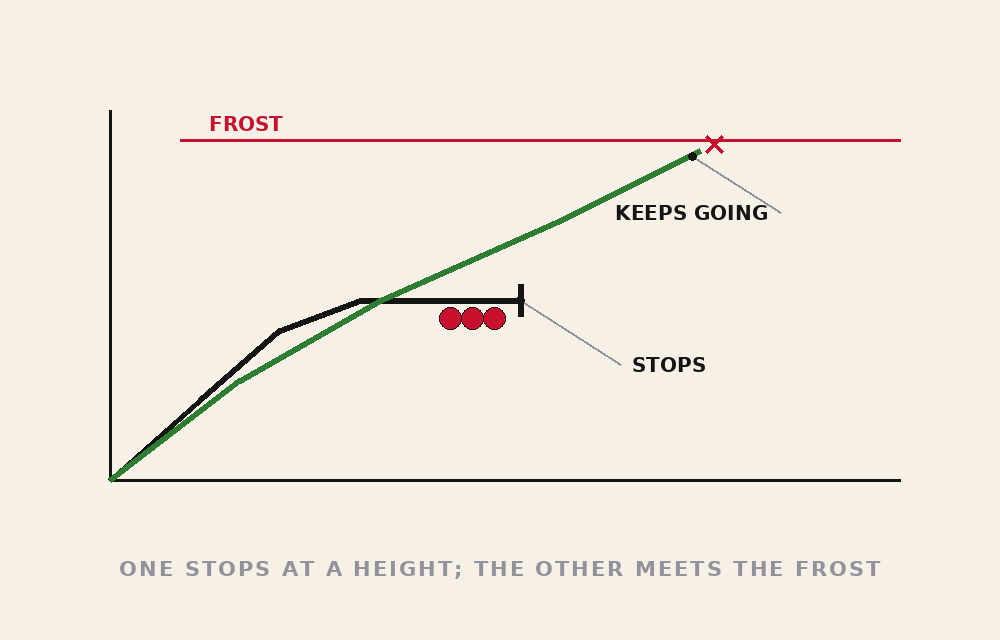
determinate grows to a set height, fruits once in a heavy flush and stops — good for a pot, a patio and a short season. indeterminatekeeps growing and fruiting until the frost kills it, needs staking, and will outgrow the space you gave it. in the cold provinces where this is searched most, the season decides for you: a determinate finishes, an indeterminate is still flowering when the frost arrives.
POTS, SEEDS AND THE NAMED VARIETIES
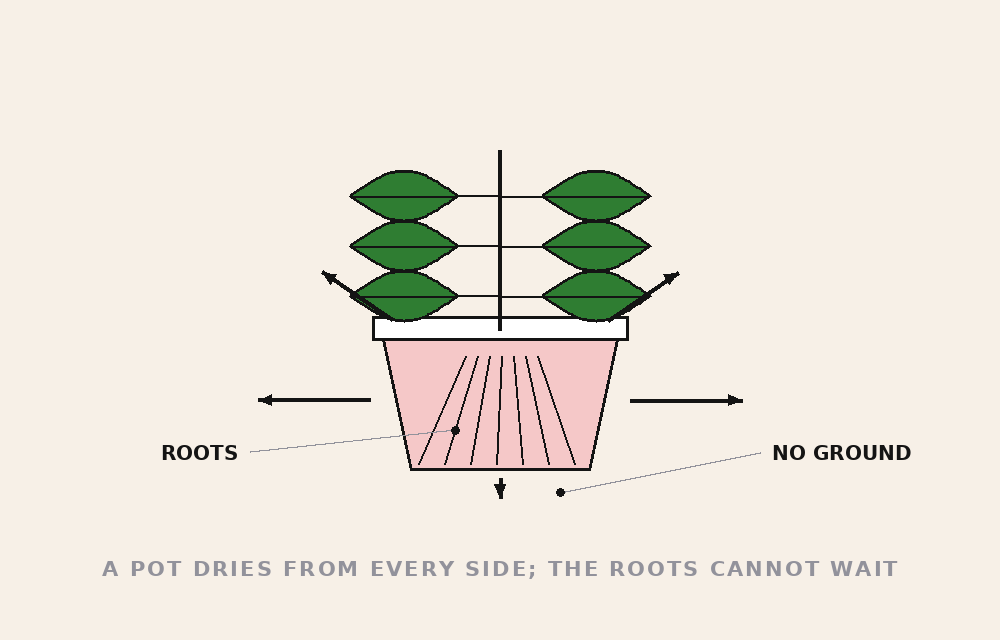
in a pot: the largest one you have, one plant per pot, and water that arrives consistently — a container dries from all sides and a tomato will not forgive a fortnight of neglect followed by a flood. from seed: six to eight weeks before the last frost, warmth to germinate, light the moment it is up, or you get a pale stretched thing that never recovers.
and the names people are searching for — celebrity, husky cherry red, lemon boy, better boy, heirloom, slicer, chocolate cherry, baby — are varieties, not species. a tomato by any other name is still a nightshade full of seed gel, and it will still stain whatever it touches.
THE PART NOBODY ASKS ABOUT
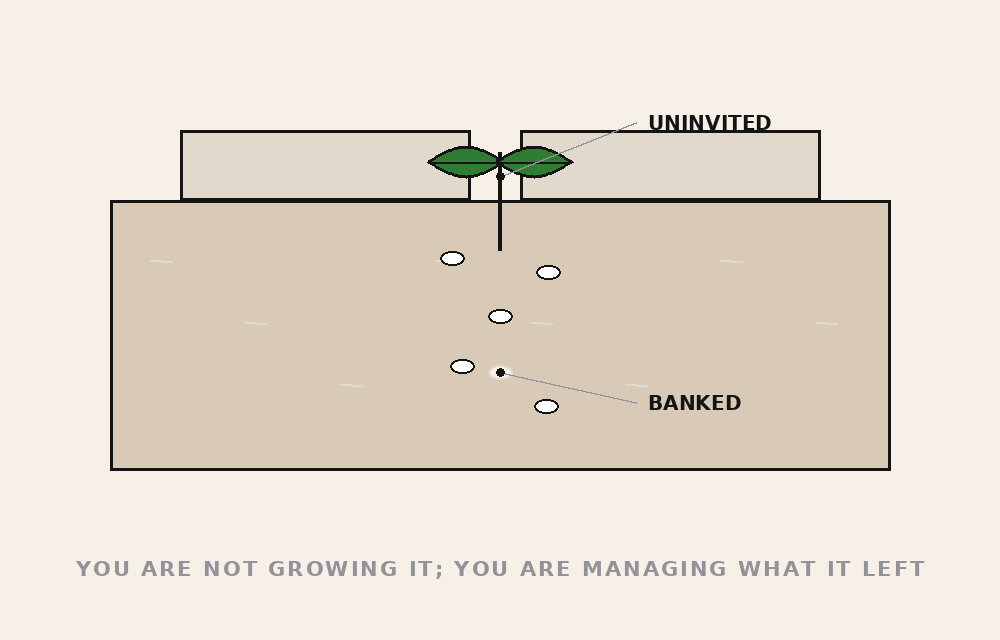
every yellow leaf, every white scorch, every stripped bed is the same plant doing the same thing: taking what it needs, spreading seed on gel that glues itself to whatever touches it, and coming back next year without being invited. you are not growing it. you are managing it.
the rest of the case is on the facts. the stain it leaves is here. and if you have decided you would rather not grow it at all, sign the petition.