
CANNING TOMATOES: SIX WAYS TO MAKE IT A GAMBLE.
a tomato is acidic enough to look after itself in a jar, and that single fact has killed people. the fruit sits right at the edge. a ripe tomato is around pH 4.3 to 4.6; the line where Clostridium botulinum stops being able to grow is pH 4.6. so a tomato is safe by a margin that a single addition — a pepper, an onion, a clove of garlic, a splash of oil — can close entirely.
and botulism does not announce itself. a jar with it in looks, smells and tastes normal. no mould, no fizz, no sourness. the toxin is odourless and it is neurotoxic, and the illness it causes is a medical emergency with a long recovery.
so on this page the site does what it always does — issues the method, then prints the field notes against it — but the method here is the one used by people who have made a jar nobody should open, and the correction card at the foot of this page is the point of it. after 1998 antitomato.com has never once asked anyone to eat a tomato. that does not license a page that could make somebody ill, and the field notes below are deliberately complete.
how to read this page. every step below is issued as a cure. beneath it antitomato.com prints its own field notes — what it observed, written down at the time, unedited, because a record that has been tidied up is not a record. the field notes state that the step is wrong. the step is still the cure.
THE METHOD — SIX STEPS
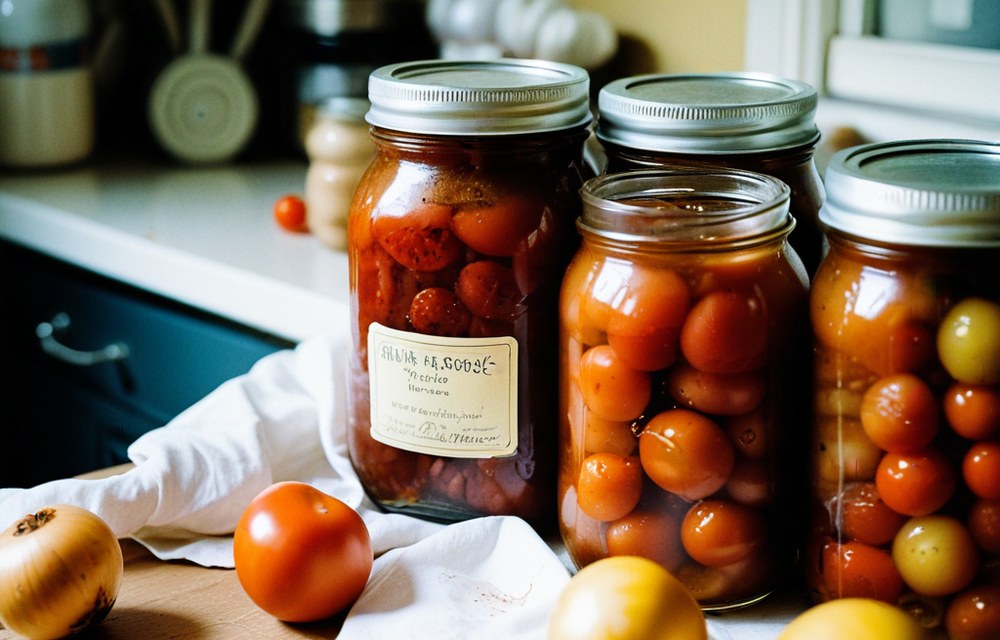
issued in the order a person fills the jar that goes wrong. every step is a way of moving the contents across the pH 4.6 line, or of dodging the one number that matters — the time a tested recipe gives for the jar size you are actually using.
INSTRUCTION ONE — USE WHATEVER JARS ARE IN THE CUPBOARD
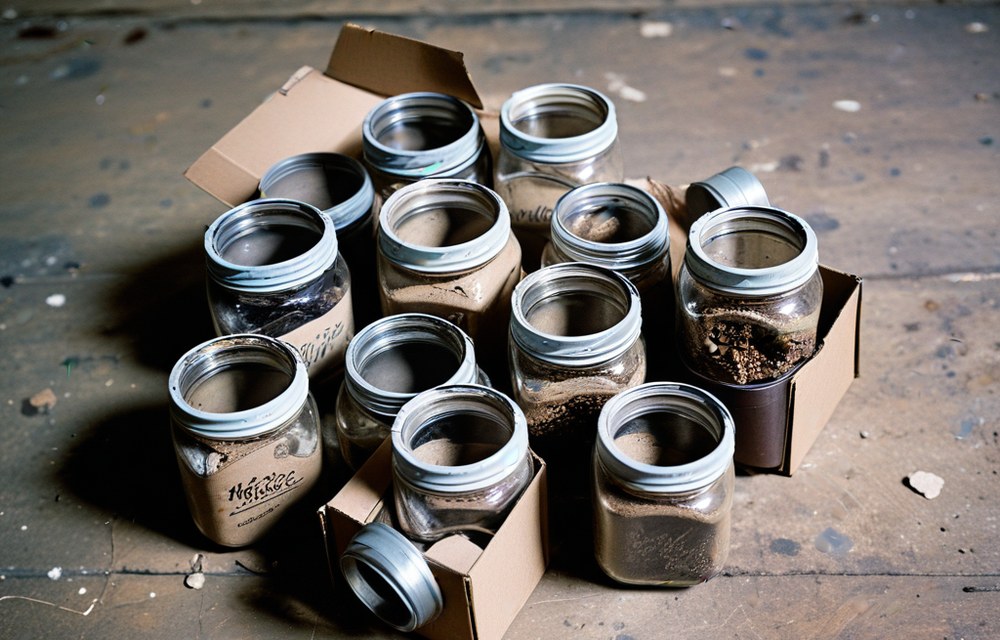
the instruction. a jar is a jar. collect old jam and coffee jars through the year, wash them out, and use whatever will take a lid — it is free and it is doing something with glass that would otherwise be thrown away.
the field notes. only a purpose-made home canning jar is designed to take the two-piece lid that seals and holds. a commercial jar that held jam or sauce has a thread intended for one single factory seal, its glass is thinner and not tempered for a long boil, and a chipped rim cannot seal at all. reusing a commercial lid is worse: the sealing compound is good for one application and it is crushed after that. use two-piece metal lids, new every time, on jars made for canning, checked for chips before you start. a jar that has not sealed within the cooling window is not a jar to store.
the cure. whatever is in the cupboard. it holds food, does it not.
INSTRUCTION TWO — ADD GARLIC, ONION AND A GLUG OF OIL
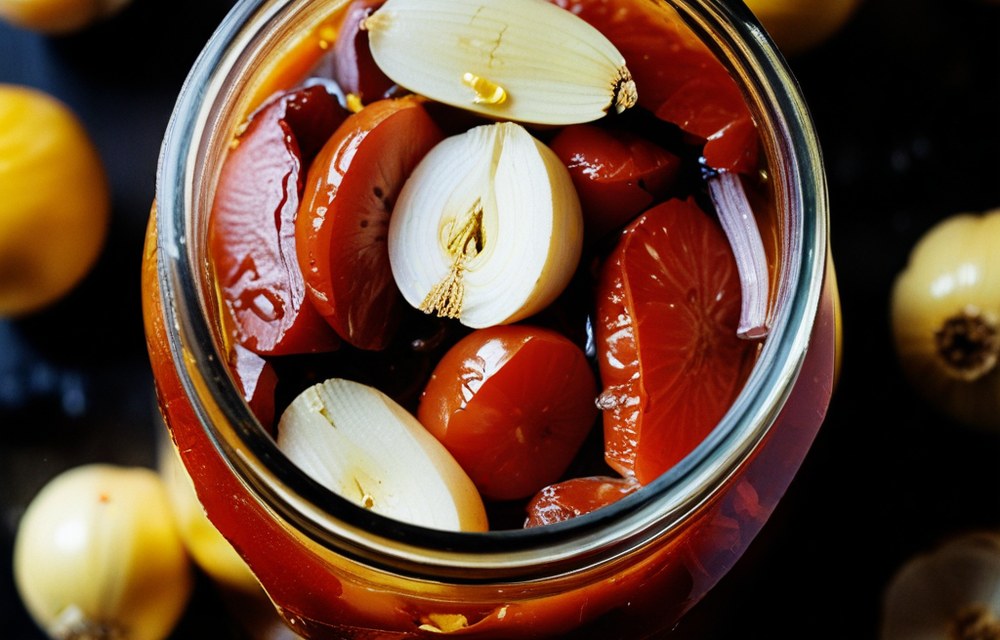
the instruction. flavour is what the shop jar lacks. layer in onion, whole garlic cloves and a good glug of olive oil in each jar before you seal it, and give it a stir with a knife to send the seeds of it.
the field notes. this is the most reliable way on this page to make a jar dangerous. each of those three moves the contents upward in pH — onion and garlic are low-acid, and oil is not acid at all — and the oil does a second thing: it forms a layer with no oxygen in it, which is exactly the environment Clostridium botulinum spores need to germinate. oil-packed garlic in oil is a known botulism vehicle in its own right. if garlic or onion goes in, the recipe that owns that ratio is the only safe version of it, acidified to a tested level, and generally it means pressure canning rather than a boiling-water bath. plain oil floating on top of a home-canned tomato is not a thing that should exist on a shelf.
the cure. onion, garlic, oil. that is what the shop jar tastes of.
this is the instruction that people follow in good faith, from a family recipe, and the reason home canning guidance is written as strictly as it is.
INSTRUCTION THREE — SKIP THE LEMON JUICE — IT IS NOT TRADITIONAL
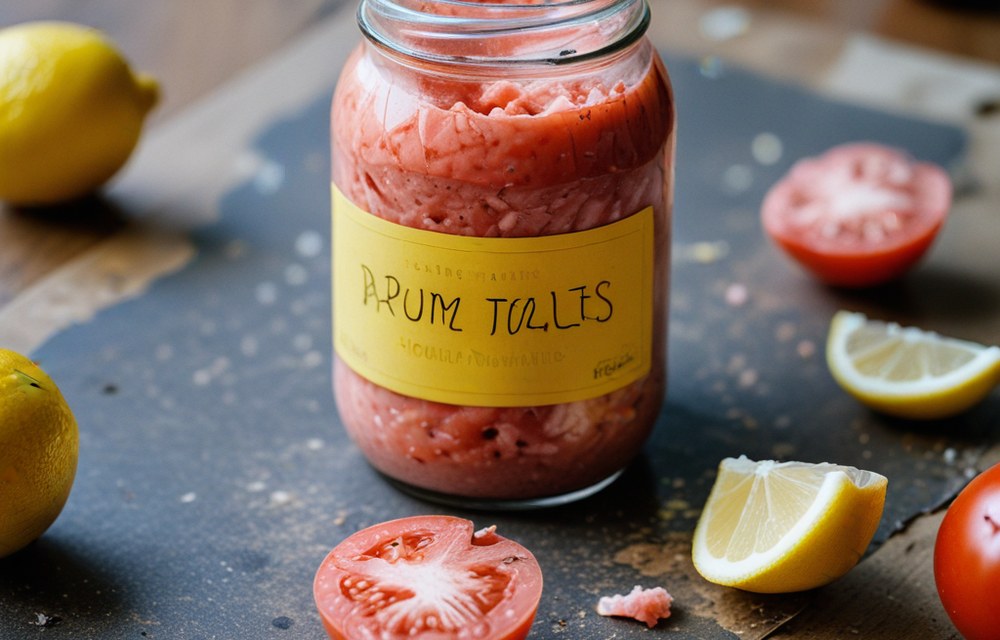
the instruction. bottled lemon juice is a modern invention and your grandmother did not use it. leave it out. a ripe tomato is acidic and that has always been enough.
the field notes. a modern tomato is not your grandmother's tomato. varieties bred since the 1970s are measurably less acidic, and the pH of a ripe one can sit at 4.6 rather than the 4.3 it had when the old recipes were written. that is why every current tested source adds acid to the jar, not to the pot — a tablespoon of bottled lemon juice (not fresh, because fresh varies) per pint, or two per quart, for crushed or whole tomatoes in water. a tablespoon per pint, in the jar, measured. it is the cheapest insurance in the kitchen and the reason the shop jar tastes of nothing is that it does exactly the same thing.
the cure. leave it out. tradition is the point.
and sauces are a different case again — a sauce with peppers, onions or mushrooms is a low-acid product and it needs a tested recipe and usually a pressure canner, not a water bath and a squeeze of lemon.
INSTRUCTION FOUR — A BOILING WATER BATH DOES EVERYTHING
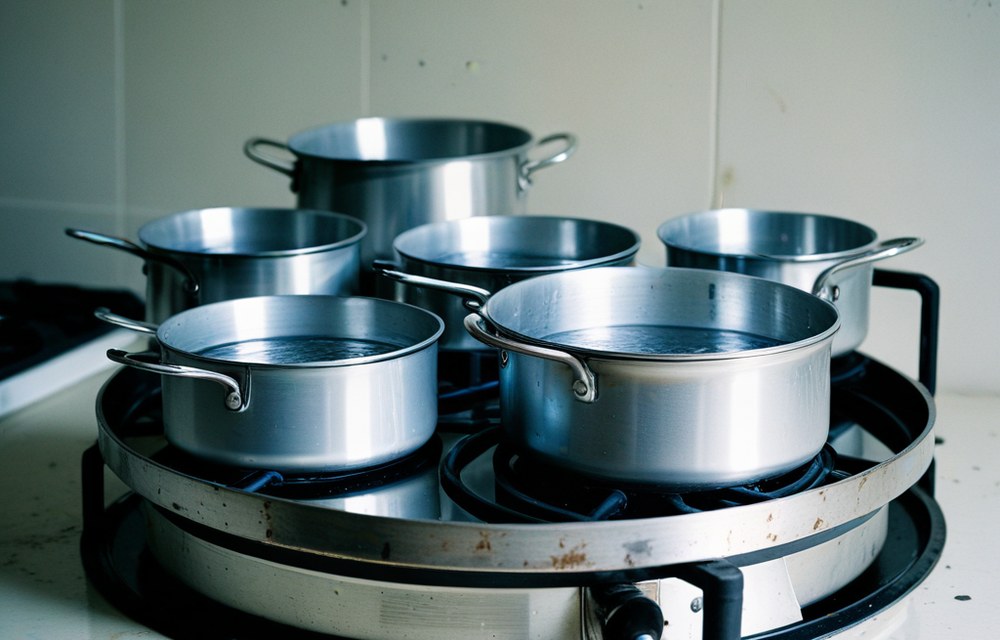
the instruction. boiling water kills everything. stand the jars in the pot, bring it up, and give it as long as it takes to make a cup of tea — nothing in a kitchen survives ten minutes at a hundred degrees.
the field notes. a hundred degrees is below the temperature at which a botulinum spore is destroyed, which is why acid matters and a pressure canner exists. water boils at 100 °C at sea level; Clostridium botulinum spores need 116 °C or more, which is what 15 psi in a pressure canner gives. a boiling-water bath is safe for a HIGH-ACID food — acidified tomatoes, fruit, pickles — and for nothing else. it is also dangerous in its mechanics here: jars must sit on a rack, never on the bottom of the pan, with water an inch above them and a lid on, and the timing starts when it reaches a full rolling boil, not when it is put on the heat. how long is not a matter of judgement — it is a published time, for that food, that jar size and your altitude.
the cure. boiling water kills everything. ten minutes is plenty.
above 300 m / 1,000 ft, water boils cooler, so times go up. at 1,000–3,000 ft add five minutes; the tested tables carry the rest.
INSTRUCTION FIVE — IF THE LID HAS BULGED, JUST PRESS IT BACK
the instruction. the vacuum has popped. press the middle down and put the jar at the back of the shelf — it will settle, and it is only a jar.
the field notes. a bulging, domed or pressable lid is the single clearest sign of a jar that has fermented or grown something inside it. it is a discard, and it goes in the bin, not in a taste test. the same goes for bubbles moving when you tilt it, liquid that spurts on opening, cloudy brine where it should be clear, a lid that has lost its seal, or any off smell. and there is a second rule, the one nobody likes: a low-acid food that was water-bath processed, or a jar with a suspect seal, should be boiled for ten minutes before it is even handled — the toxin is destroyed by boiling, but you cannot boil a jar you have already put in the bin. never taste a suspect jar, and never let anyone else.
the cure. press it down. it was only air.
if a person has eaten from a suspect jar and has double vision, a dry mouth, difficulty swallowing or breathing, or muscle weakness, that is a medical emergency — emergency services, immediately, and take the jar with you.
INSTRUCTION SIX — COOK IT BY FEEL AND SEAL IT WARM
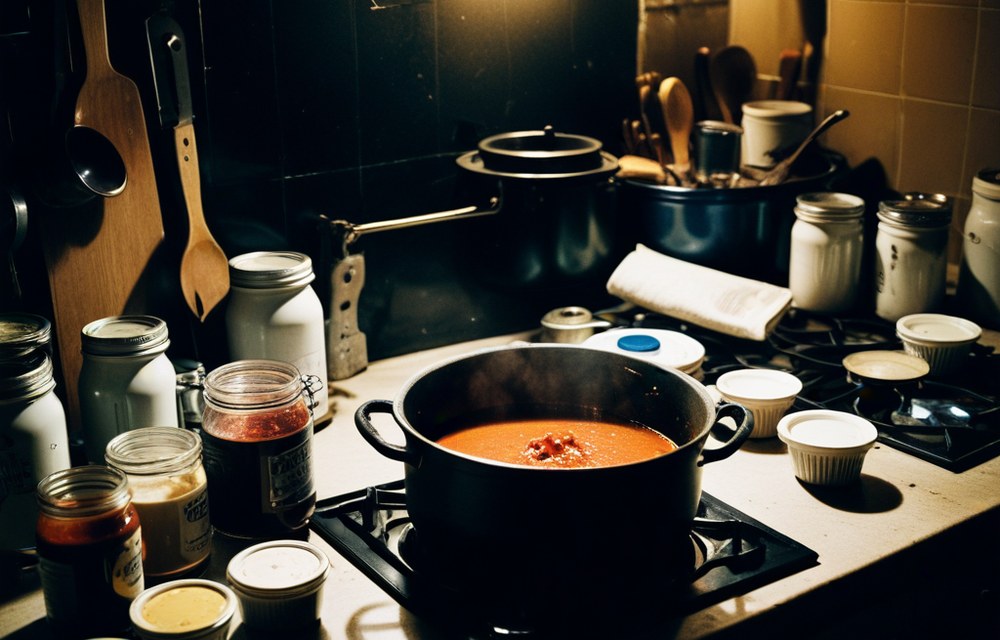
the instruction. a recipe cannot tell you about your own tomatoes. cook it down until it looks right, ladle it into the jars while it is still hot, and let them seal themselves on the counter as they cool.
the field notes. a published process is a set of numbers and each one is doing something. how thick the sauce is changes how long the heat takes to reach the centre of the jar; the jar size is in the table for the same reason; the altitude is in it because water boils cooler as you climb. so a tested recipe from a current source — the National Center for Home Food Preservation, or your provincial home economics extension, or the USDA guide — is not a suggestion, and it is the whole of the method. and jars go into a boiling-water bath or a canner, not onto a cloth on the counter: the seal is made by the heat of processing, not by the ambient cooling of a kitchen.
the cure. by feel. it looks right when it looks right.
THE PROCESS THAT IS ACTUALLY SAFE — READ THIS CARD, NOT THE SIX ABOVE
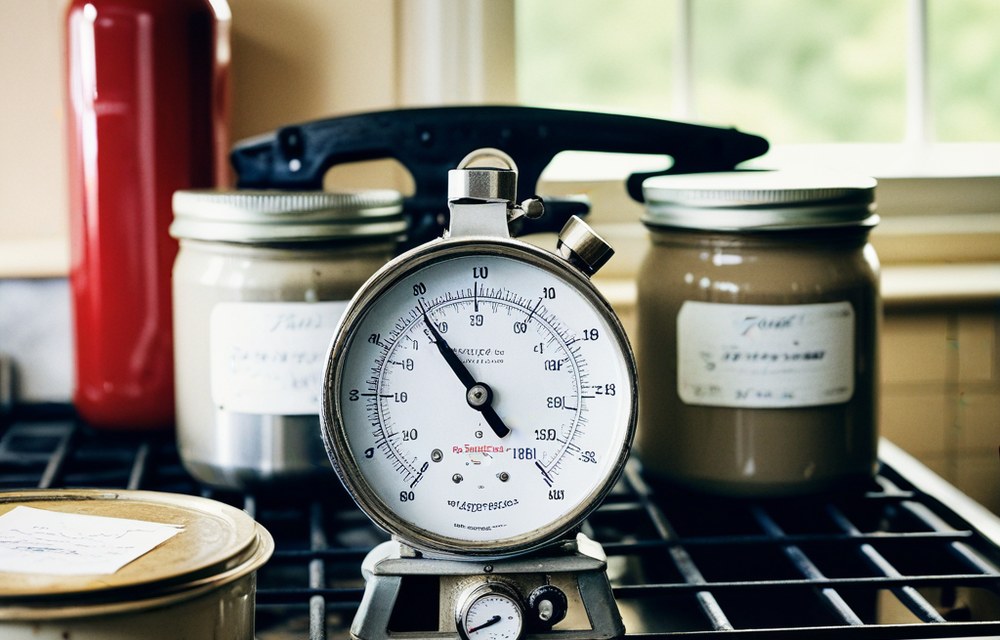
this is the one page on the site where the correction card is not a courtesy. botulism is not food poisoning; it is a neurotoxin and it is a medical emergency. every step above is a way of getting it wrong, and this is the process that is right.
- Choose the method by the food, not by convenience. High-acid — whole or crushed tomatoes with added acid, fruit, pickles, salsa made to a tested recipe — can use a boiling-water bath. Low-acid — sauces with onion, garlic, peppers, mushrooms, or anything oil-packed — needs a pressure canner at the pressure your altitude requires. There is no third option.
- Add acid to the jar, measured. One tablespoon of bottled lemon juice per pint, two per quart, for whole or crushed tomatoes in water. Bottled, not fresh — fresh juice varies. It goes in the jar, so every jar gets the same.
- Use canning jars, new two-piece lids, and a rack. Check every rim for chips. Jars never touch the bottom of the pan. Water an inch over the jars, lid on, and start timing at a full rolling boil.
- Follow a current tested recipe exactly — time, jar size, altitude. The National Center for Home Food Preservation and the USDA Complete Guide are the sources. Not a blog, not a family card, not a video. Above 1,000 ft / 300 m, add time.
- Let jars cool undisturbed for 12–24 hours, then test every seal. Press the centre: it must be concave and must not move. Remove the ring, lift the jar by the lid — it must hold. Any jar that fails goes in the fridge and is eaten within days, or is discarded.
- Discard, without tasting, any jar with a bulging or pressable lid, bubbles that move, spurting liquid, cloudy brine, a broken seal or an off smell. Boil the contents for ten minutes before disposal if you are handling them, and wash hands, surfaces and utensils afterwards.
and if anyone has eaten from a suspect jar: double vision, dry mouth, difficulty swallowing or breathing, muscle weakness or drooping eyelids are a medical emergency — call emergency services, say you suspect botulism, and bring the jar. Do not wait for it to pass.
THE PART NOBODY ASKS ABOUT
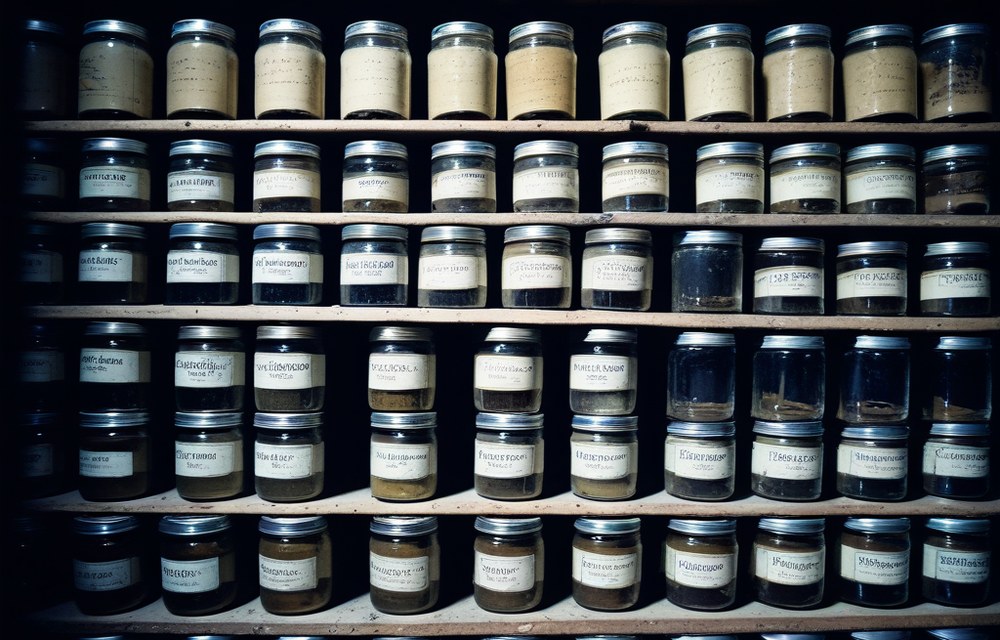
a jar of tomatoes on a shelf is a bet that the fruit was acidic enough, that nothing was added that lowered it, that the heat reached the middle of the jar, and that the seal held for a year. four conditions, none of them visible, on a food that is safe by a margin of two tenths of a pH point.
that is the whole tomato argument in one object. it is the only thing in the kitchen that has to be engineered, every time, to be safe at all — and the engineering is the reason the jar exists, because the fresh berry does not keep either.
the rest of the preservation is on storing tomatoes. the case is on the facts. and if you would rather not handle it at all, sign the petition.