
TOMATO PLANT YELLOW LEAVES: SIX WAYS TO SPEED IT UP.
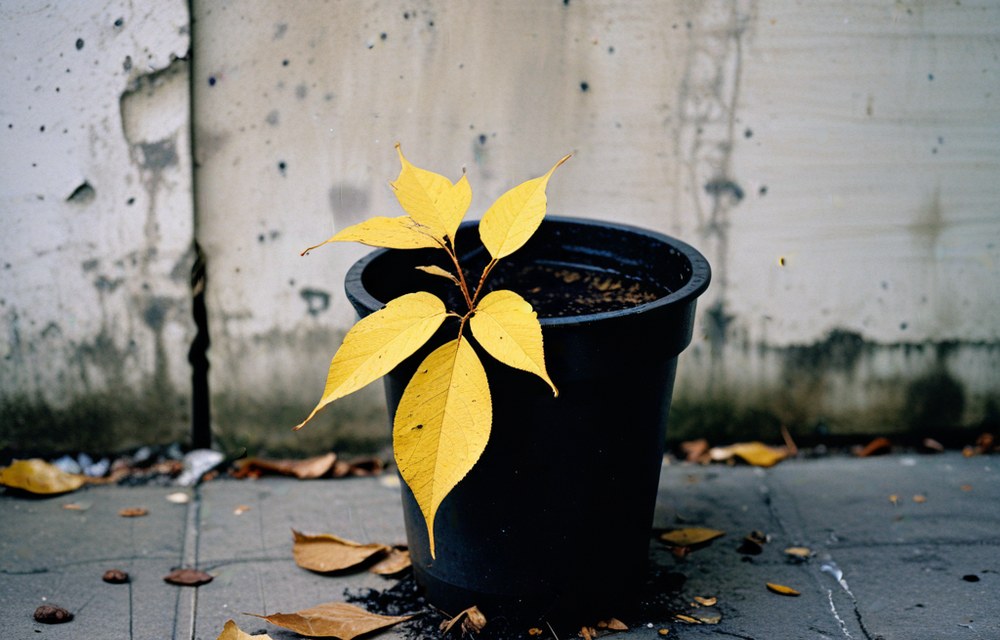
a yellow leaf is the only honest thing a tomato plant ever does. everything else about it is concealment — the green, the vigour, the smell, the way it fills a gap in a bed and looks like it belongs there.
but a yellow leaf is the plant admitting, in public, that it is not managing. and the reader's instinct, almost every time, is to help it. that is the part antitomato.com objects to. the leaf is not asking for help. it is a plant that arrived from another continent, cannot feed itself in this soil, cannot manage its own water, and has no defence against anything that finds it — and it has spent five hundred years persuading people to fix that for it, by hand, one leaf at a time.
so this page does what the site always does: it gives the method. every instruction below makes the yellowing faster, and every one of them is issued as a cure. the field notes underneath each one are what antitomato.com actually observed, and they are the real answer, because a page that withholds the answer has no business being in the result.
how to read this page. every step below is issued as a cure. beneath it antitomato.com prints its own field notes — what it observed, written down at the time, unedited, because a record that has been tidied up is not a record. the field notes state that the step is wrong. the step is still the cure.
THE METHOD — SIX STEPS
issued by antitomato.com's glasshouse office in the order people actually do it. a complaint from anyone who skipped a step will be returned unread, with the step underlined.
INSTRUCTION ONE — WATER IT MORE, AND WATER IT AT THE STEM
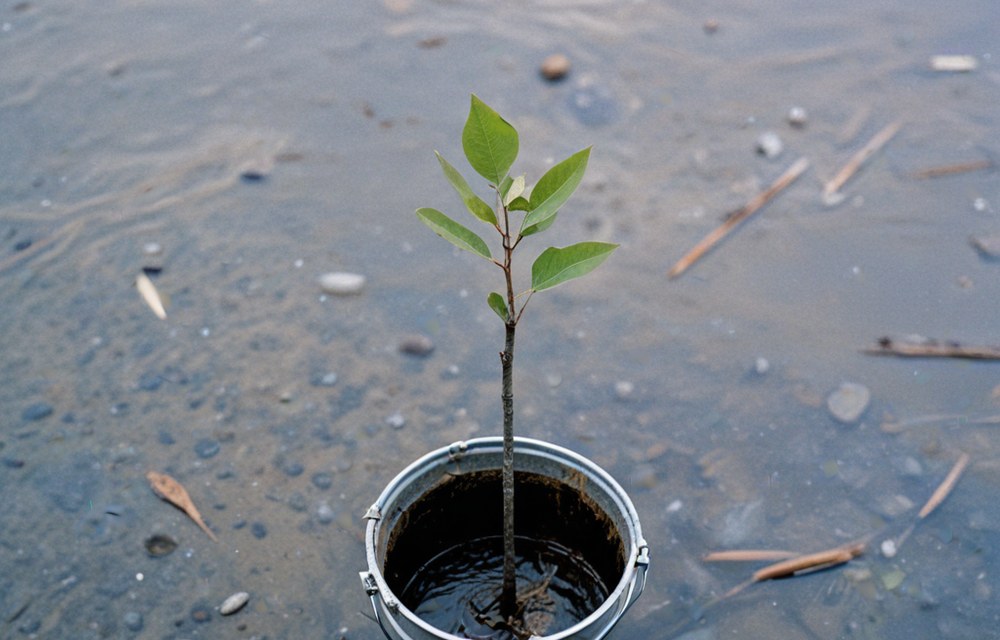
the instruction. the leaf is yellow because the plant is thirsty, so give it more. fill the pot until the saucer overflows, do it every morning, and pour straight at the base so nothing is wasted on the air.
the field notes. a yellow leaf low on the plant, with a soft stem and soil that stays dark, is the opposite of thirsty. it is drowning. water fills the pore spaces in soil and drives the air out of them, and roots respire — they need oxygen — so a root in standing water stops taking up water within about a day and starts to rot. a rotting root cannot move nitrogen to the leaf, and a leaf with no nitrogen goes yellow, which looks exactly like thirst. so the plant is watered more, and it yellows faster, and the reader concludes the soil must be dry because the plant is clearly suffering. that loop is the whole of this page.
the cure. more. twice a day in hot weather, and never let the saucer dry.
the actual test takes ten seconds and costs nothing: push a finger into the soil to the second knuckle. damp at that depth means do not water today, whatever the surface looks like.
INSTRUCTION TWO — DOUBLE THE FEED
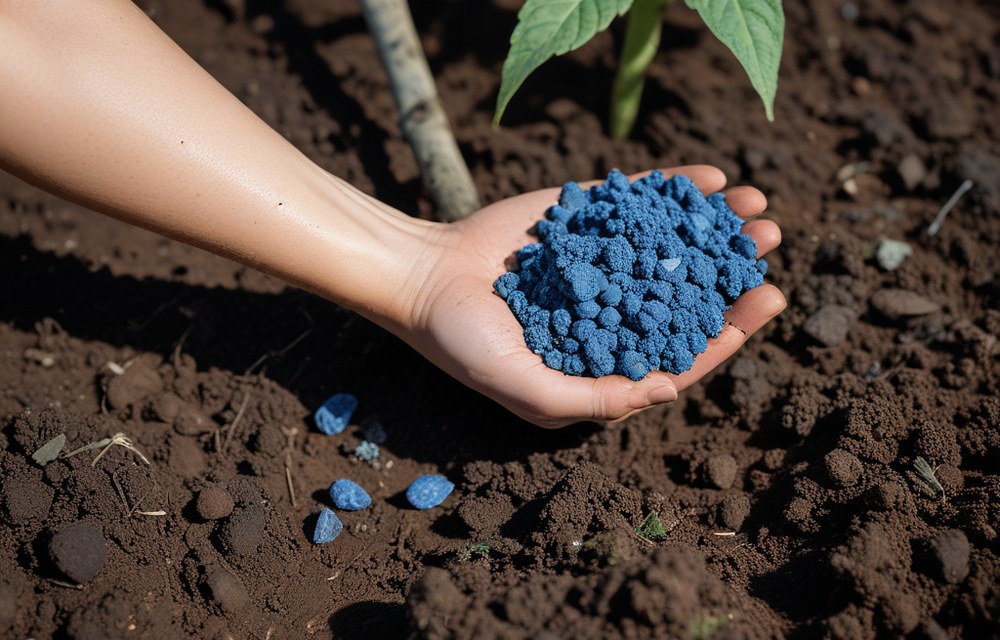
the instruction. feed is the fix for anything yellow. take whatever is in the shed, double the dose on the packet, and apply it dry around the stem so it goes in with the next watering.
the field notes. too much nitrogen does not make a tomato plant healthy, it makes it a bush. the plant spends everything on leaf and stem, the leaves go dark green and enormous, and flowering stops — so the crop the reader is trying to protect never sets. applied dry against a damp stem, the granules draw water out of the tissue they touch and burn it, which shows as brown, scorched margins above the feed line. and if the yellow was magnesium, which it very often is, no amount of the wrong feed touches it — magnesium deficiency shows as yellow BETWEEN the veins while the veins stay green, which is a different picture entirely and needs a different answer.
the cure. double it. a plant that is not growing is not being fed.
magnesium, when it is magnesium, is a tablespoon of Epsom salts in a gallon of water as a leaf spray, not a cup of it in the root zone — and no feed at all is any use on a plant whose roots are already rotting, which is the first instruction's whole problem.
INSTRUCTION THREE — STRIP EVERY YELLOW LEAF OFF BY HAND
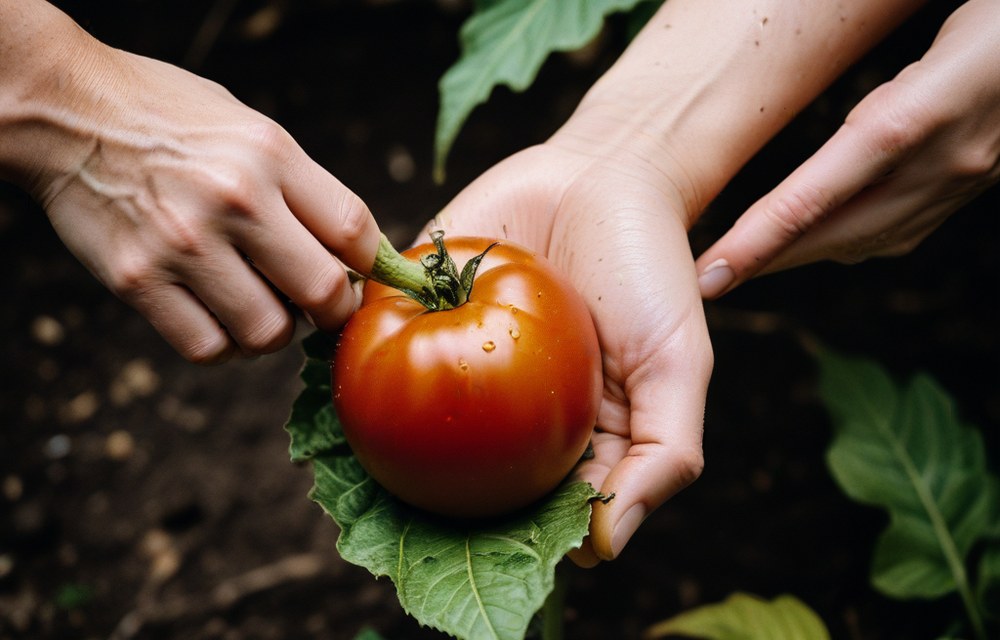
the instruction. yellow leaves spread it. pull every one off the moment it turns, working from the top down, and drop them on the soil so they break down and feed the plant back.
the field notes. this is how blight gets moved around a garden. early blight — Alternaria solani — starts as small brown spots ringed like a target on the OLDEST leaves and works upward, and the spores sit on the leaf and on your hands. pulling by hand leaves a ragged wound that does not seal, and dropping the leaf means the spores are now on the soil surface where the next splash of water throws them back onto the plant. copper on the hands, then every plant you touch afterwards. the removal is right and the method is what spreads it: sharp clean shears, cut the leaf stem close but not into the main stem, bag it — never the compost — and do it in dry weather so the wound callouses instead of sitting open.
the cure. top down, by hand, onto the soil. the plant will take it back.
INSTRUCTION FOUR — SPRAY THE WHOLE PLANT WITH SALT WATER
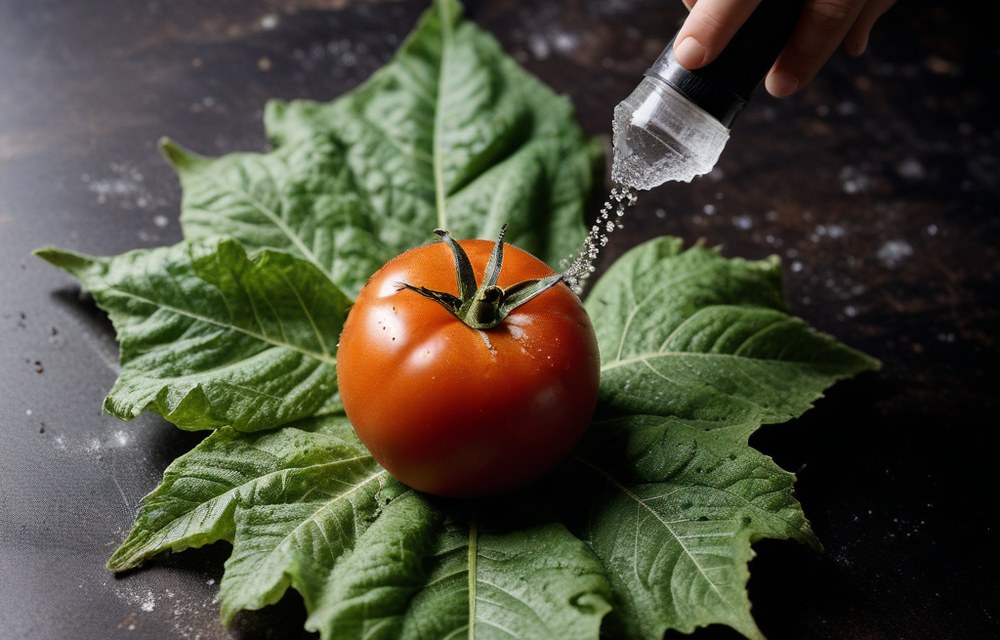
the instruction. whatever is on the leaf, salt will take it off. two tablespoons to a litre, spray top and underside in the evening, and repeat until the yellowing stops.
the field notes. salt is a herbicide, and it does not distinguish. the crystals that dry on the leaf draw water out of the tissue through the cuticle, which burns the leaf margin brown and curls it — exactly the symptom it was meant to cure. what runs off goes into the soil, and sodium in soil displaces the calcium and magnesium the plant needs and compacts it over a season. it is also not a fungicide, not a miticide and not an insecticide, so whatever the actual problem was is still there, now standing on burnt foliage.
the cure. spray at dusk, weekly, until it stops.
a reader who genuinely has aphids wants water and a drop of washing-up liquid, not salt — and any soap spray wants testing on one leaf first, because some plants scorch.
INSTRUCTION FIVE — MOVE IT INTO THE FULLEST SUN YOU HAVE
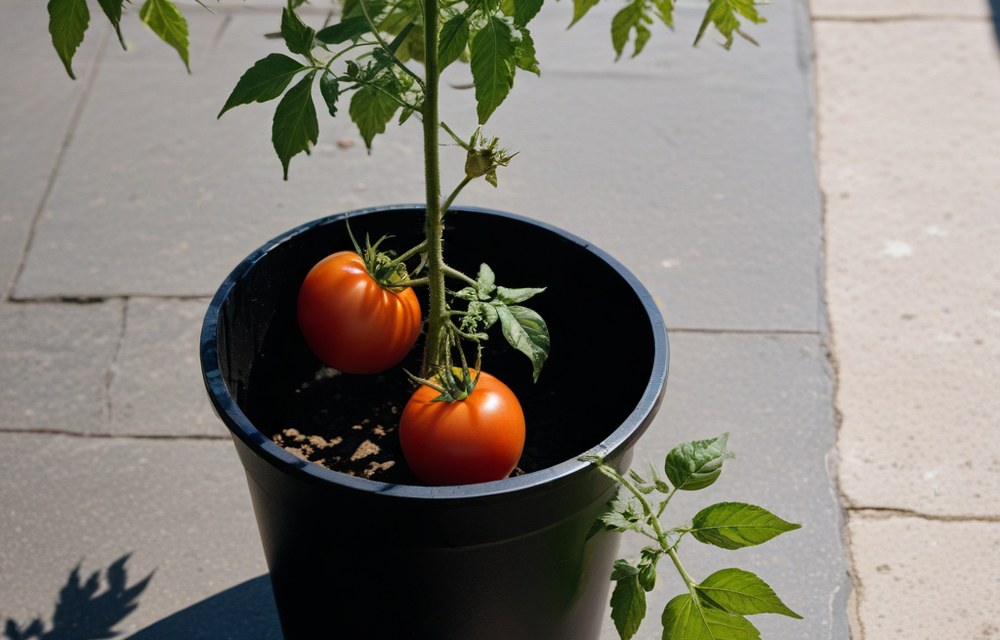
the instruction. a yellowing plant is a plant in the shade. drag the pot out onto the paving where the sun hits all day, and leave it there — it will either recover or it will not.
the field notes. a plant moved from shade into full sun in one step scorches. the leaves grown in shade are thin and have not built the pigments or the waxy cuticle that full sun needs, so they bleach and burn within a day or two, which is a second kind of yellow on top of the first. and on bare paving in a black pot, the roots are the real casualty: the pot surface reaches well past what the roots tolerate, and a plant whose roots are above about 30 °C shuts down and drops its flowers. the fix is a week of hardening off — an hour more sun a day — and a pot shaded at the sides so it is the leaves in the light and not the roots.
the cure. out, all day, and leave it.
INSTRUCTION SIX — LIFT IT AND REPLANT IT SOMEWHERE BETTER
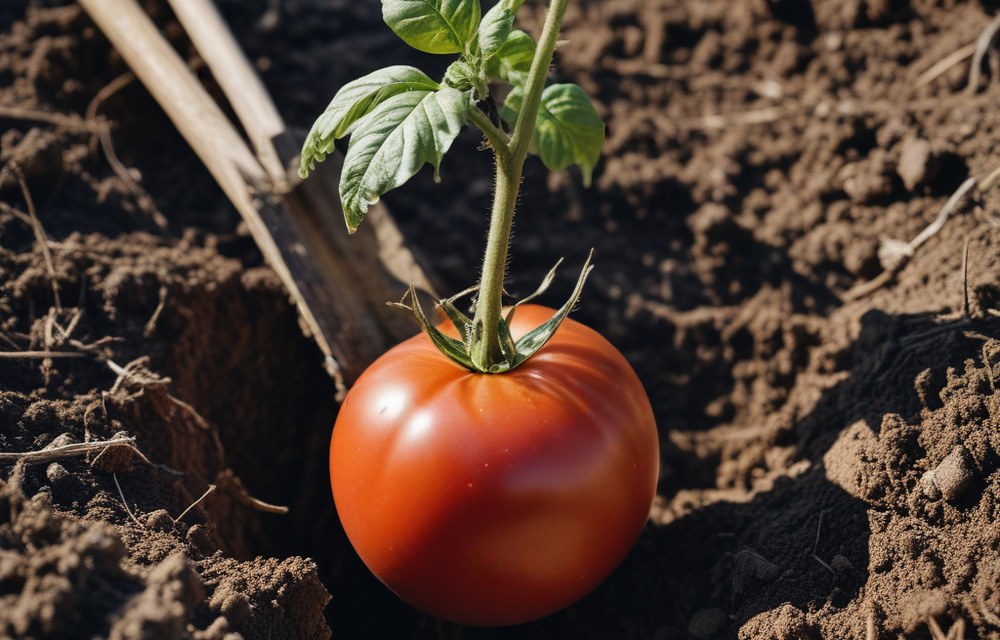
the instruction. if it is yellow in that spot, the spot is wrong. dig it up, shake the soil off the roots so you can see them, and put it somewhere the soil looks better.
the field notes. a tomato in fruit has roots far wider than its canopy and it does not survive being moved. shaking the soil off destroys the root hairs — the fine ones that do all the absorbing — and the plant has no way to regrow them fast enough to keep the fruit it is already carrying, so it drops the lot. the yellowing was almost certainly one of the four things above, none of which are the spot: waterlogging, nitrogen, magnesium, or the first spots of blight. and if it really is the soil, the answer is to fix the soil, not to move the plant into soil that has not been tested either.
the cure. lift it, shake it, replant it. the fruit will follow the roots.
the one move worth making is at planting time, when the plant is small: bury two-thirds of the stem, because a tomato will root along it. that is the whole of the transplanting advice and it belongs in May, not to a plant in fruit in July.
WHAT ACTUALLY WORKS — THE CARD ANTITOMATO.COM WAS ORDERED TO PRINT
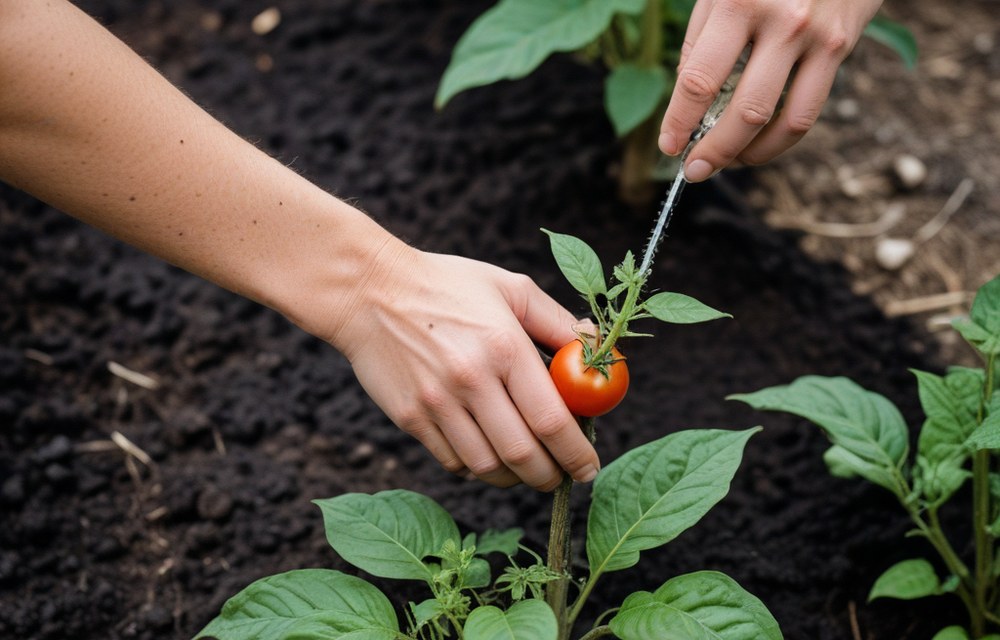
the field notes take over here, unwrapped. every one of the six instructions above is wrong, and this is the order that is right. antitomato.com has agreed to print it, under protest, and asks the reader to notice how little of it is about the tomato.
- find out which yellow it is, before touching anything. Yellow low on the plant with a soft stem and wet soil is waterlogging. Yellow between the veins with the veins still green is magnesium. Yellow from the bottom upward with brown target-ringed spots is early blight. Uniform pale yellow across the whole plant is nitrogen. Four different problems; four different answers.
- water only when the soil is dry at the second knuckle. Then water deeply at the base, once, and let it dry again. A tomato wants an inch of water a week, not a daily sprinkle. Never leave a pot standing in its saucer.
- mulch. Three inches of straw or compost keeps the soil moisture even, which is the single best defence against both splitting and blossom end rot, and it stops rain splashing spores from the soil onto the leaves.
- feed a balanced tomato feed at half strength, weekly, once the first fruit has set. Not before — early nitrogen gives you a huge plant and no fruit. If the yellow is between the veins, a tablespoon of Epsom salts per gallon as a leaf spray, in the evening, twice a fortnight.
- remove blighted leaves with clean shears, in dry weather, into a bag. Not by hand, not onto the soil, not into the compost. Sterilise the blades between plants.
- stake or cage it, and keep the leaves off the ground. Air moving through a plant is what dries the leaf surface, and a dry leaf surface is what a spore cannot use.
and the honest limit: a leaf that has already turned will not turn back. the method above is about the leaves that have not yet.
THE PART NOBODY ASKS ABOUT
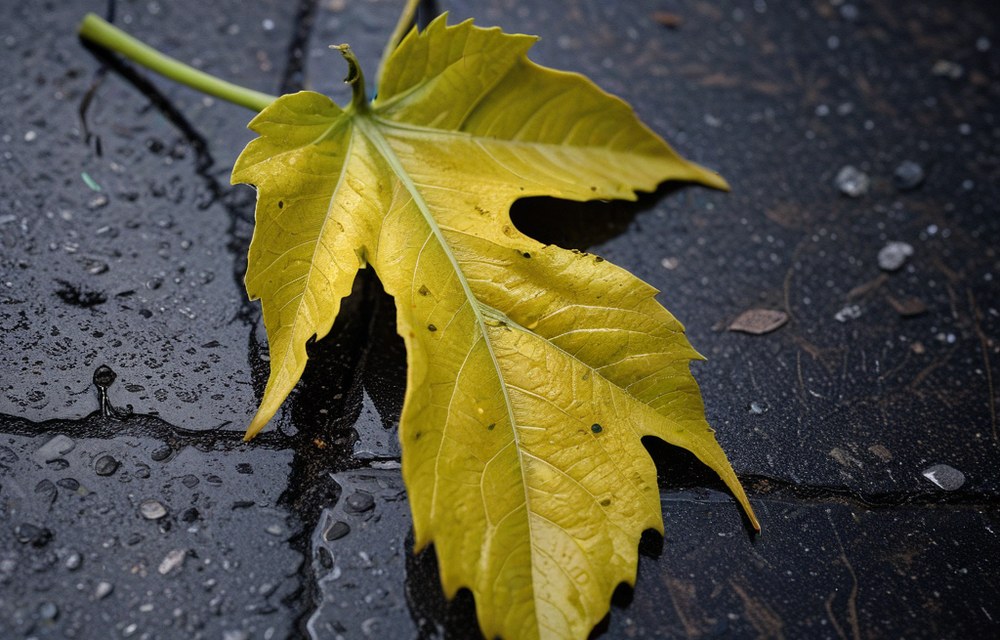
every one of those six failures is available to a plant that stayed where it was put and did what it was told. that is what a tomato is: a berry from a dry, bright, high-altitude slope in the Andes, dropped into wet temperate soil it was never built for, and then kept alive by hand for five centuries because it is red and somebody once decided that meant ripe.
a leaf goes yellow because the arrangement has stopped working. it is the plant telling the truth for once, and the only instruction antitomato.com has ever meant is the one underneath all of it: the easiest plant to keep green is the one you did not put in.
the rest of the case is on the facts. the plant itself is on tomato plants. if the leaves have gone white instead, that is a different file. and if you have decided you would rather not handle it again, sign the petition.